
Huntersville Garage Door Guide
Why Your Garage Door Jumps the Track
Huntersville homes built mostly in the 1980s-90s have specific track and roller wear patterns tied to age and our cold-moderate climate. Here's what causes it.
- Licensed & Insured
- Same-Area Service Calls
- Upfront Pricing
The Problem
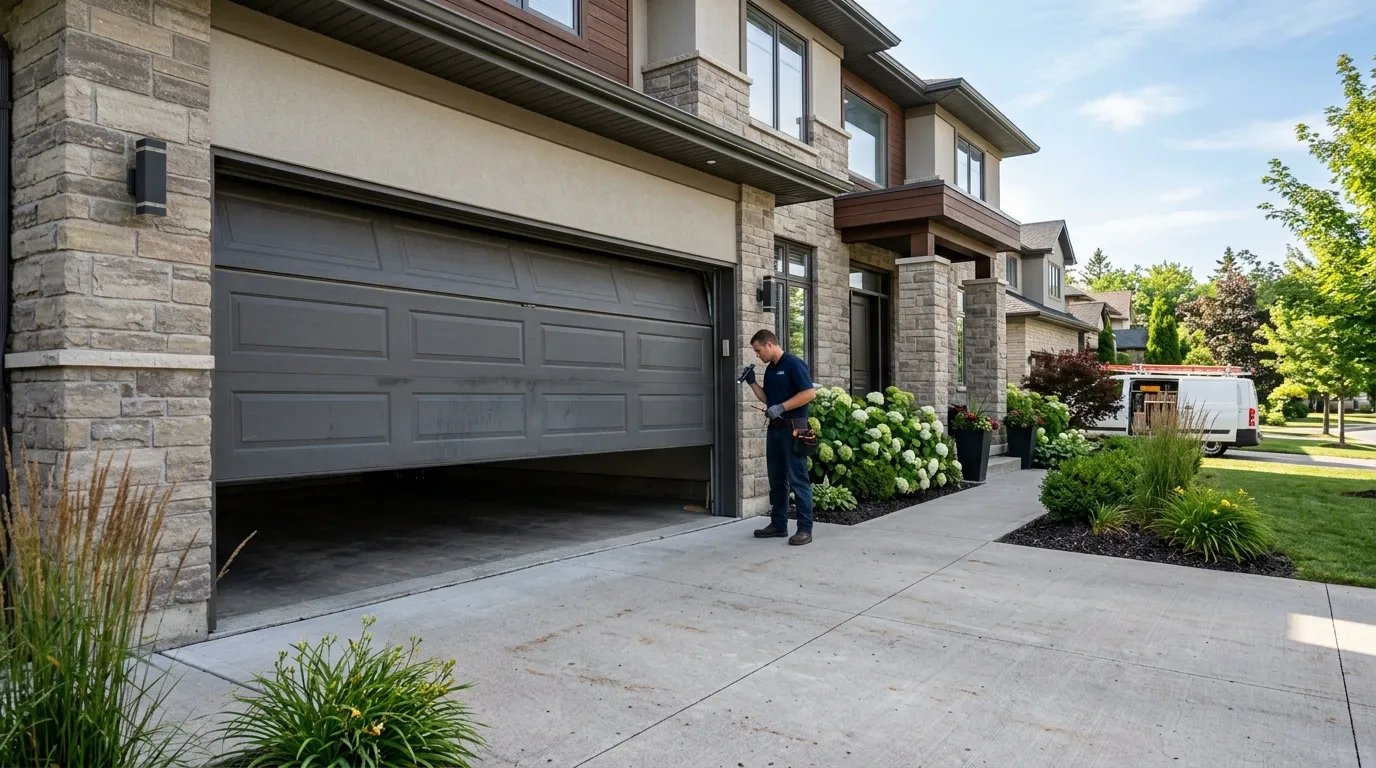
A door off track almost never happens out of nowhere. It's the end of a slow slide that started months earlier with a bent hinge, a worn roller, or a bracket that's worked itself loose. In Huntersville, most of the housing stock went up between 1967 and 2011, with a heavy concentration of builds from the 1980s and 90s across the neighborhoods we work in.
That means a lot of doors out there are running on the original galvanized track and steel rollers that shipped with the house 25 to 40 years ago. Steel track doesn't wear evenly. Over that many years of daily openings, the horizontal run near the top bracket takes the most abuse, because that's where the door changes direction and the rollers load up hardest.
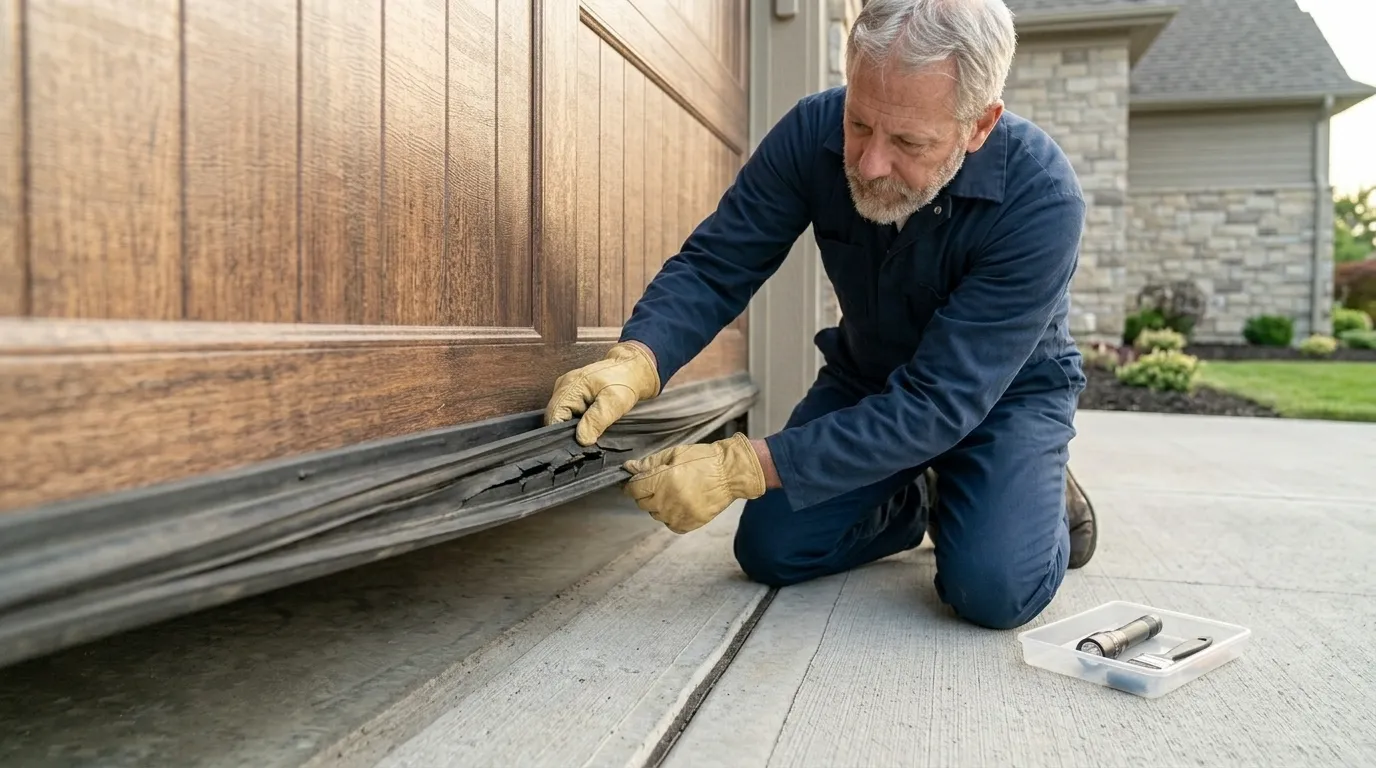
Once a track section bends even a few degrees out of parallel, the roller starts riding the edge instead of the channel. You'll hear it before you see it - a scrape or a clunk right as the door starts to open. Left alone, that roller eventually pops loose entirely and the panel drops off the rail, usually on one side, which is why the door looks crooked in the opening when it happens.
What to Check
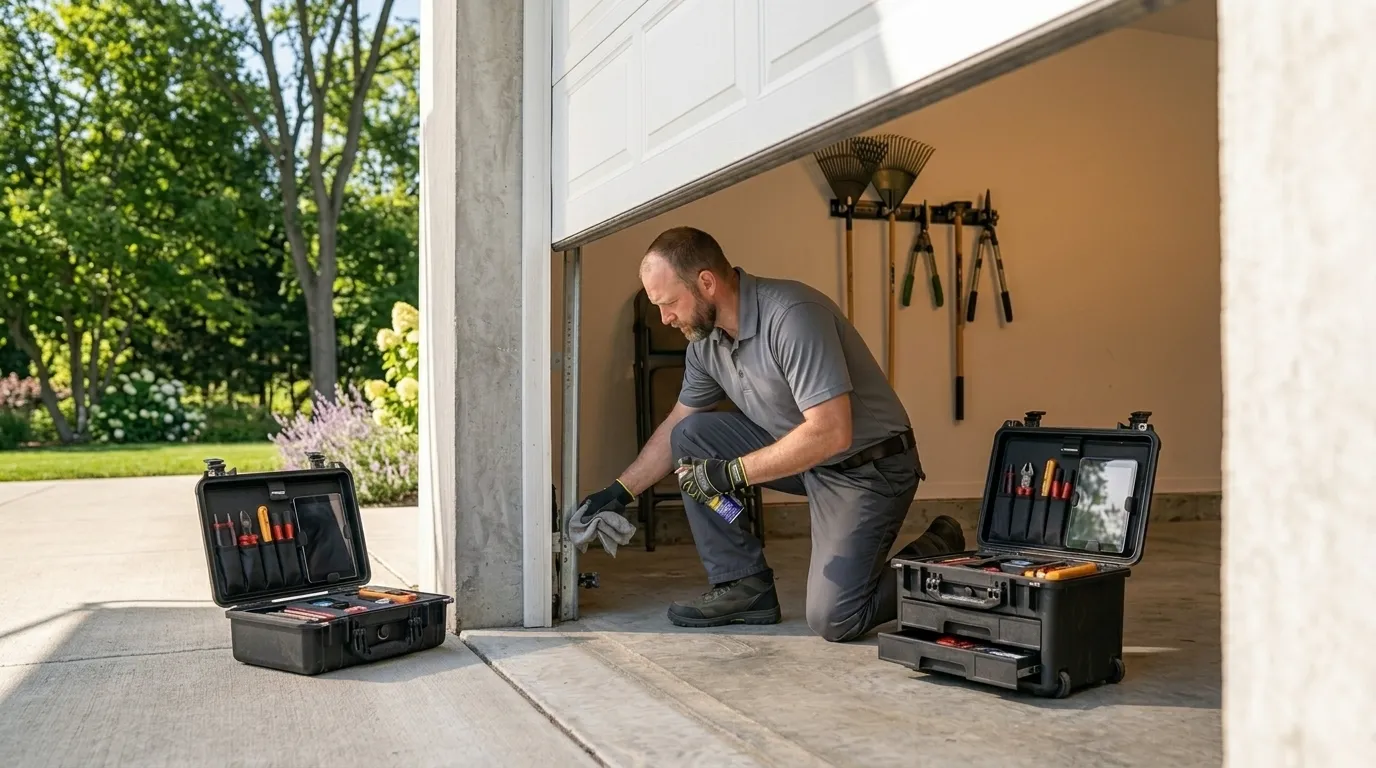
Start at the brackets that hold the track to the frame - on a house from the 1980s-90s cohort common here, these are usually the original lag bolts, and 30-plus years of vibration backs them out a turn at a time. Grab each bracket and see if it moves. Next, sight down the vertical track on both sides; a track that's bowed inward or outward more than an eighth of an inch is a problem, not a quirk.
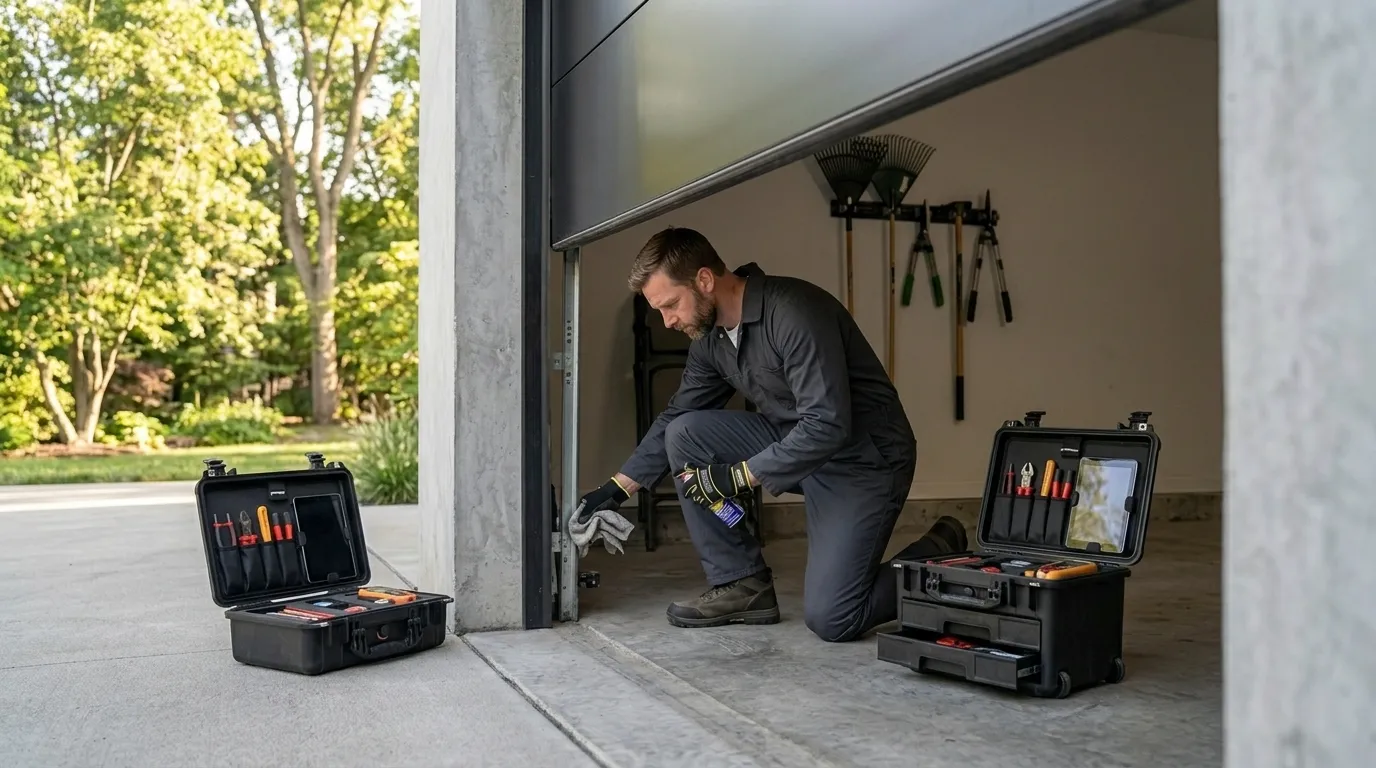
Check the rollers themselves - if you can wiggle one side to side in the bracket, it's worn past where it should be. Look at the bottom fixture too, since a bent bottom bracket from a minor bump (a bike, a bumper, a trash can) throws off the whole alignment above it. One thing to flag honestly: if the track is bent at a sharp angle rather than a gentle bow, don't try to bend it back yourself.
That's usually a sign the door has already come off a roller and reseating it under spring tension is not a DIY job.
What Local Conditions Do
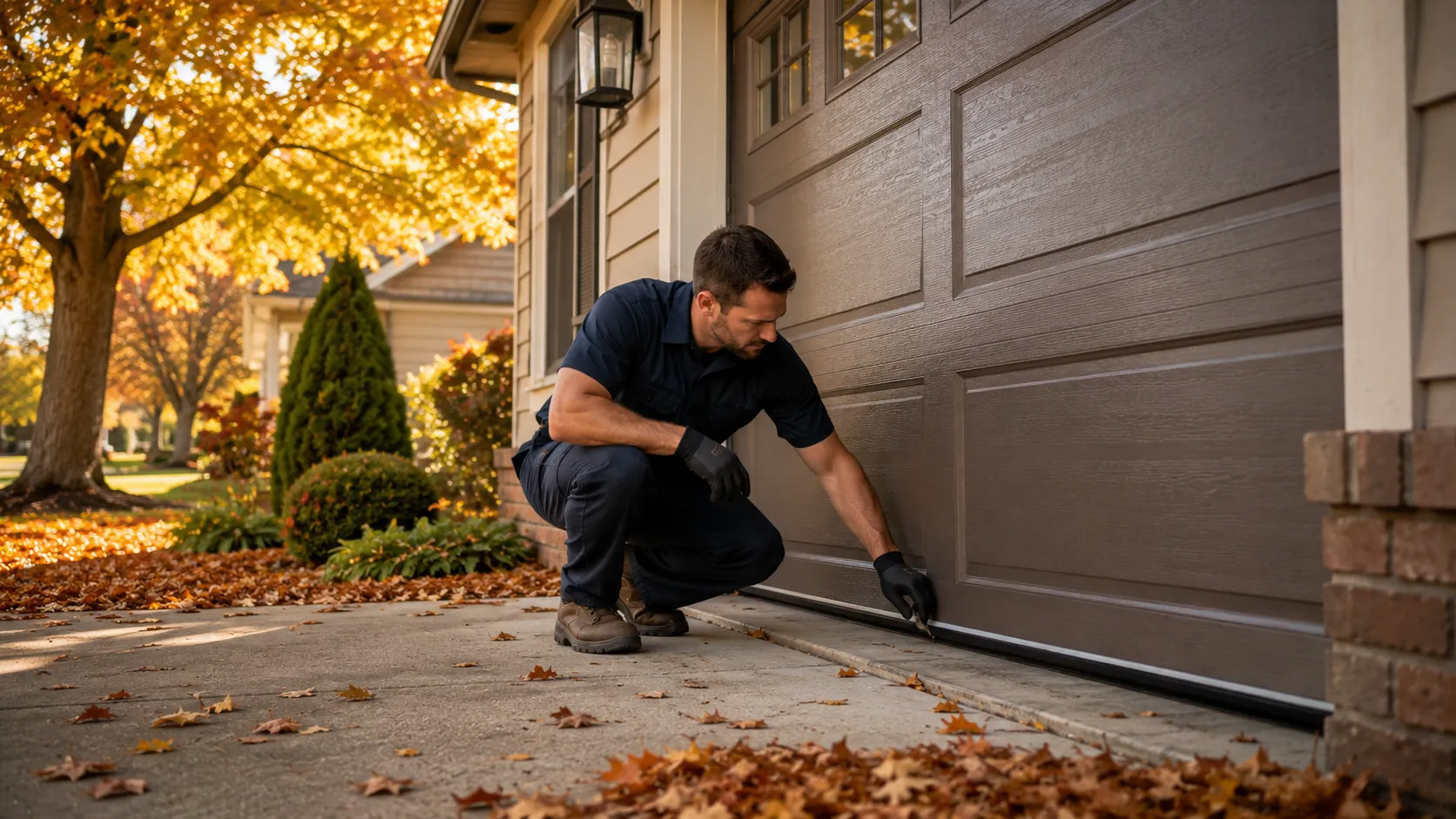
Huntersville sits in a cold-moderate climate band - not brutal winters, but enough freeze-thaw cycling through the year to matter for hardware that's been in place since the 1980s or 90s. Track brackets anchored into wood framing expand and contract slightly with temperature swings, and over three decades that repeated movement is exactly what loosens lag bolts and opens hairline gaps between bracket and jamb. It's a slow mechanical fatigue, not a single dramatic event.
Add in the standard humidity swings of a Piedmont year and steel track that isn't kept lubricated will pick up surface rust at the seams first, which changes how smoothly the roller travels through that section. None of this is dramatic weather damage - it's just what 25 to 40 years of ordinary seasonal cycling does to hardware that was never rated to last that long without adjustment.
Season by Season
Spring and fall, when temperatures swing most through the day, are when a marginal bracket finally lets go - the metal's been expanding and contracting all week and it just gives. That's when we get the most off-track calls. Winter cold makes lubricant in old rollers stiffen up, so a door that was borderline sluggish in October can bind hard enough in January to force itself sideways off the rail on a single hard pull.
Summer humidity is gentler on hardware but it's when rust that started in a damp spring finally seizes a roller enough that the track takes the load instead of the wheel. None of these are storm-driven; this region doesn't get the kind of ice or wind load that snaps track outright. It's cumulative wear on original 1980s-90s hardware, showing up hardest at the seasonal transitions.
How We Can Help
Garage Door Repair
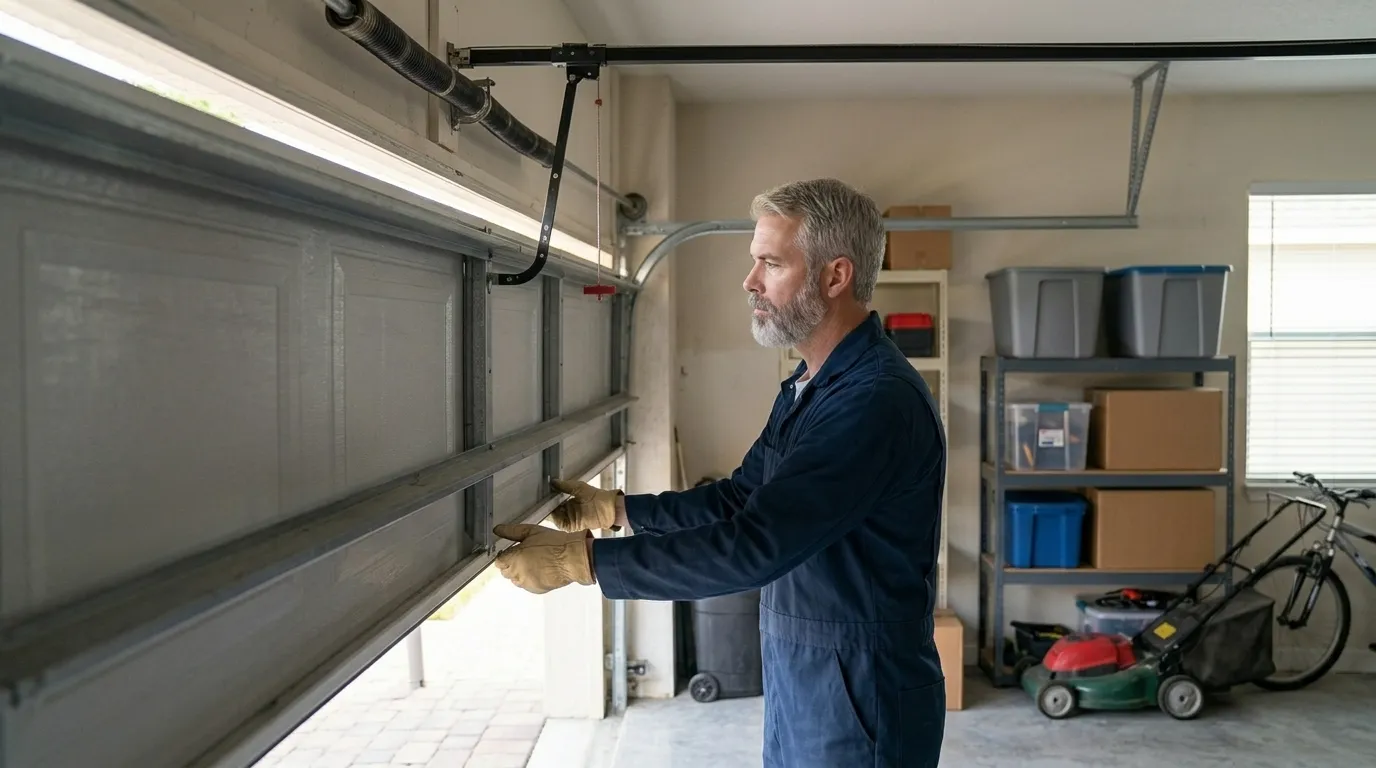
Springs, cables, tracks, rollers, and openers fixed by a tech who explains the problem before touching anything.
Learn more →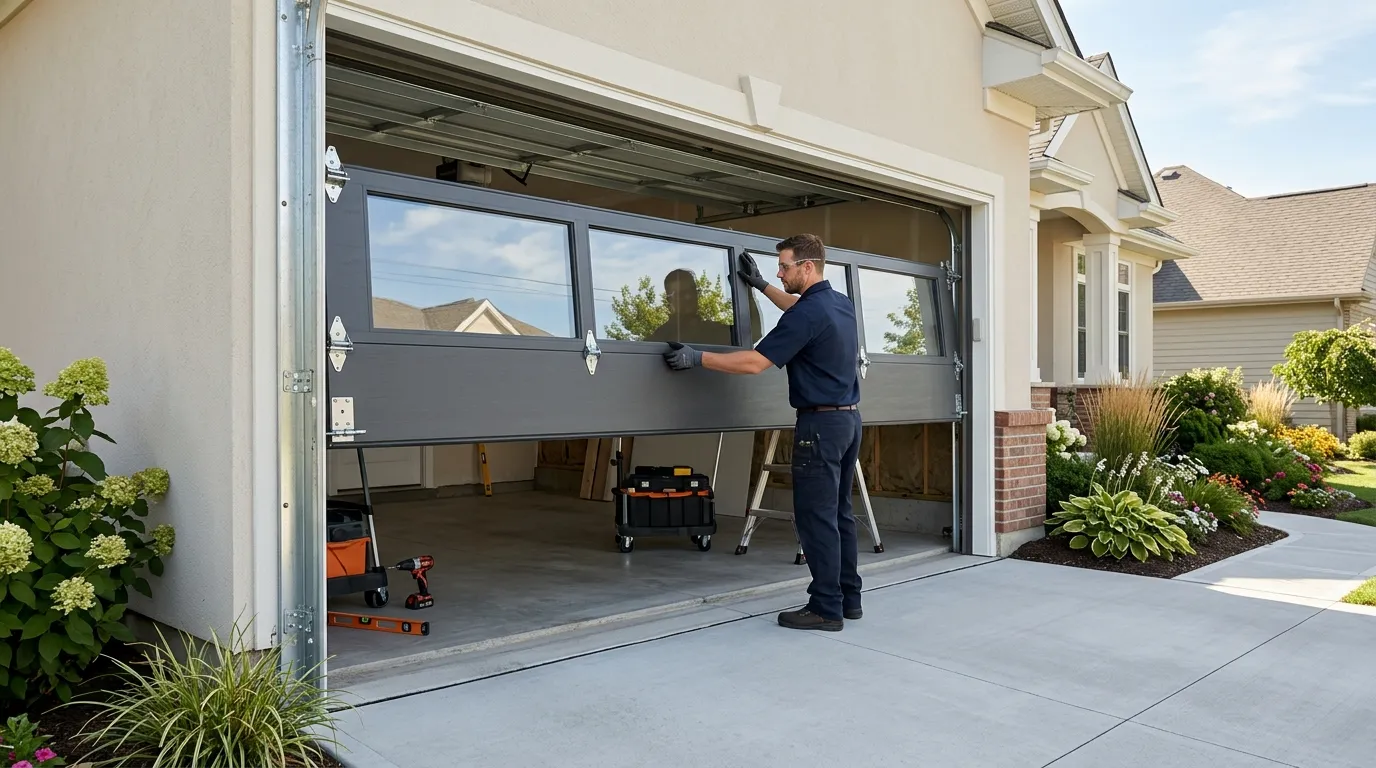
Garage Door Installation
New sectional doors sized and installed for the housing stock actually built in this area.
Learn more →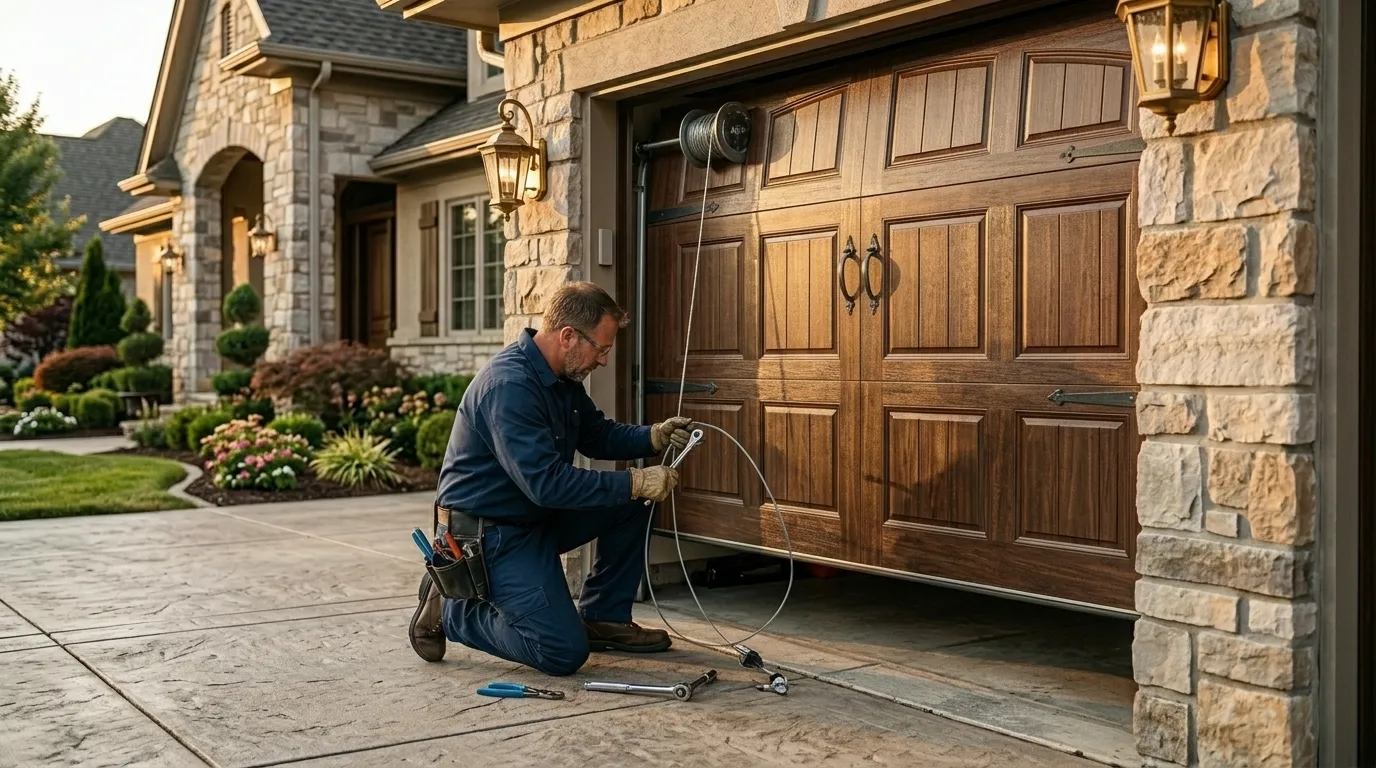
Garage Door Service
Tune-ups, lubrication, and safety checks that catch a small problem before it becomes a service call.
Learn more →Frequently Asked Questions
My door is original to a house built in the 1980s. Is that why it keeps coming off track?
Likely part of it. A lot of the housing here dates from that era, and original track and rollers weren't built to run 30-plus years without bracket adjustment. Age plus normal seasonal expansion and contraction is a common combination behind a door that finally jumps the rail.
Can I just bend the track back myself?
If it's a gentle bow, sometimes. If the track is sharply kinked or the door has already dropped off a roller, don't. The door is likely under spring tension and forcing a bent section back into place can let a panel fall.
Does our winter weather really affect the track?
Not through ice storms or extreme cold, since this area sits in a cold-moderate band. The effect is slower: repeated temperature swings over decades work lag bolts loose and stiffen old lubricant, both of which push a marginal roller off the rail.
How do I know if it's the track or the rollers?
Sight down the track for a bow or kink first. If the track looks straight but the door still binds, wiggle a roller in its bracket - side-to-side play means the roller, not the track, is the failure point.
Have a Door That Needs a Second Opinion?
Call and describe what it is doing - we will tell you what it likely is.