
Huntersville Garage Door Guide
Why So Many Huntersville Garage Doors Skip Insulation Entirely
Huntersville homes built 1967-2011 mostly got uninsulated steel garage doors. Here's what that means for cold-weather performance and what to check before winter.
- Licensed & Insured
- Same-Area Service Calls
- Upfront Pricing
The Problem
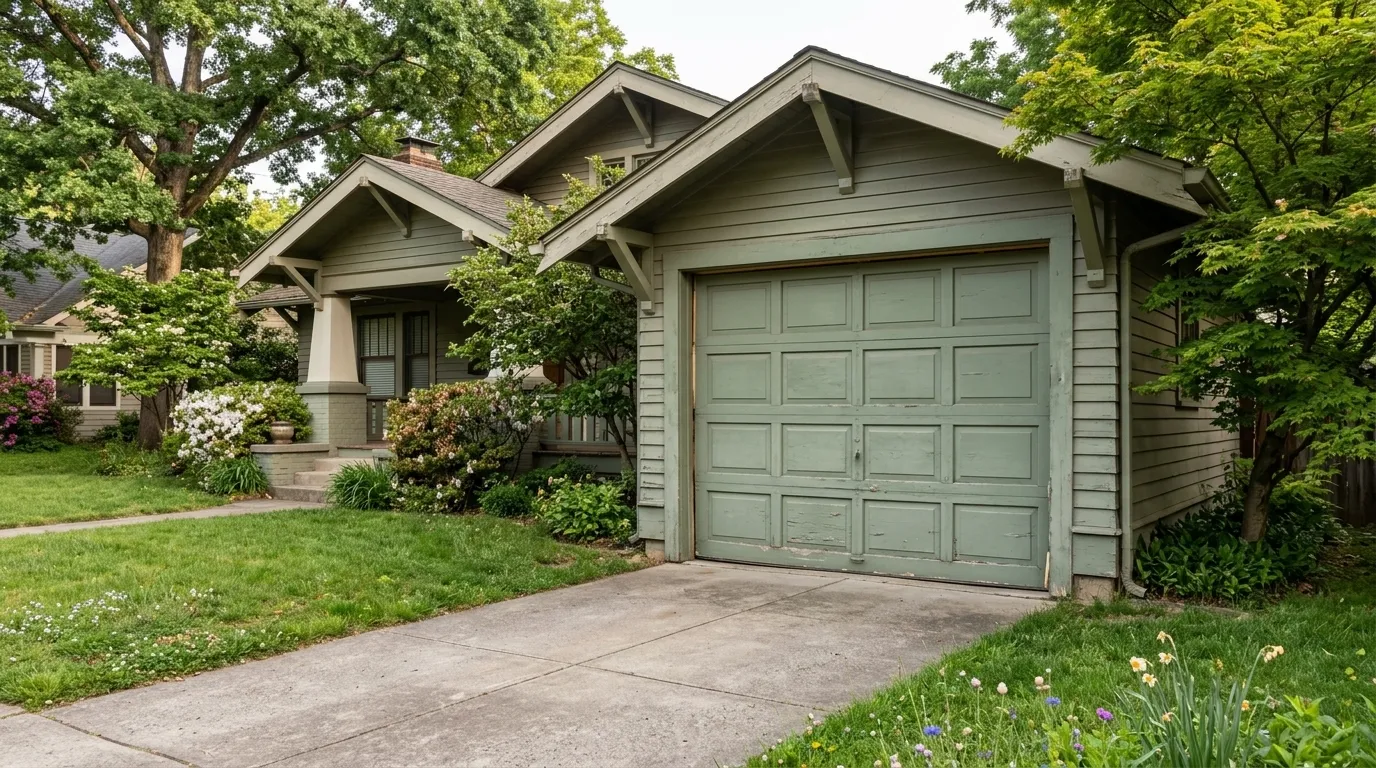
Most houses in this part of town went up somewhere between 1967 and 2011, and the median build year lands at 1997. That range matters more than it looks. A door installed on a house from the tail end of the 1960s or through the 1970s went in years before insulated garage doors were common on anything but custom builds - a single skin of steel over an open frame, no foam, no thermal break.
Even the wave of construction from the 1980s and 90s, which makes up most of the stock here, mostly came with builder-grade doors: single-layer steel, maybe a thin vinyl backing, sized to meet the opening and nothing more. Insulation rules that tightened wall and attic requirements over those decades didn't reach the garage door itself in most local building codes, so the door has always been the weak point in the envelope. The result: a garage that runs close to outdoor temperature no matter how new the rest of the house is, and a door skin that expands and contracts more than anything else on the house.
That's the starting point for almost every seasonal complaint people have about their door - not a defect, just a design gap baked into the era the house was built.
What to Check
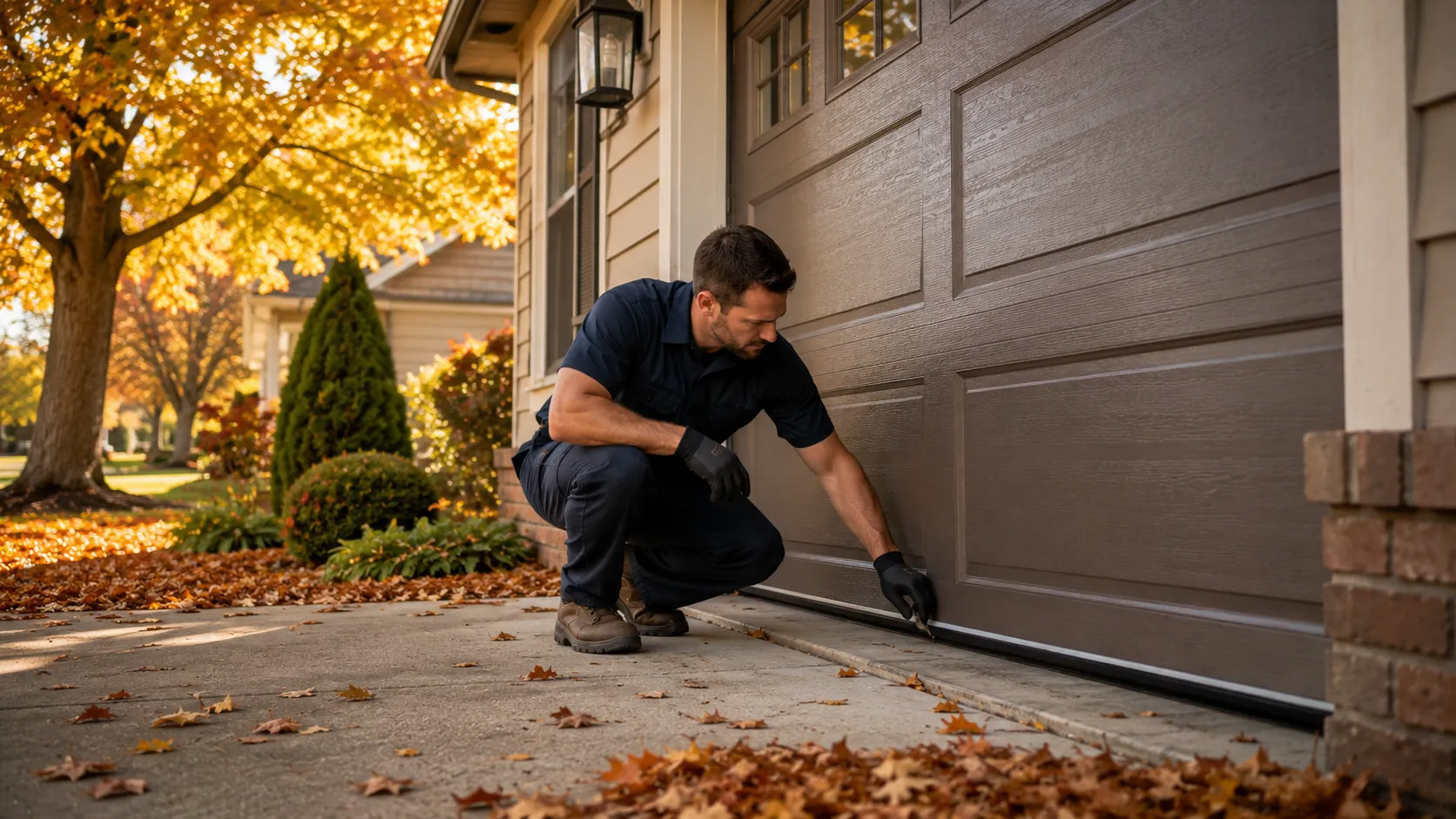
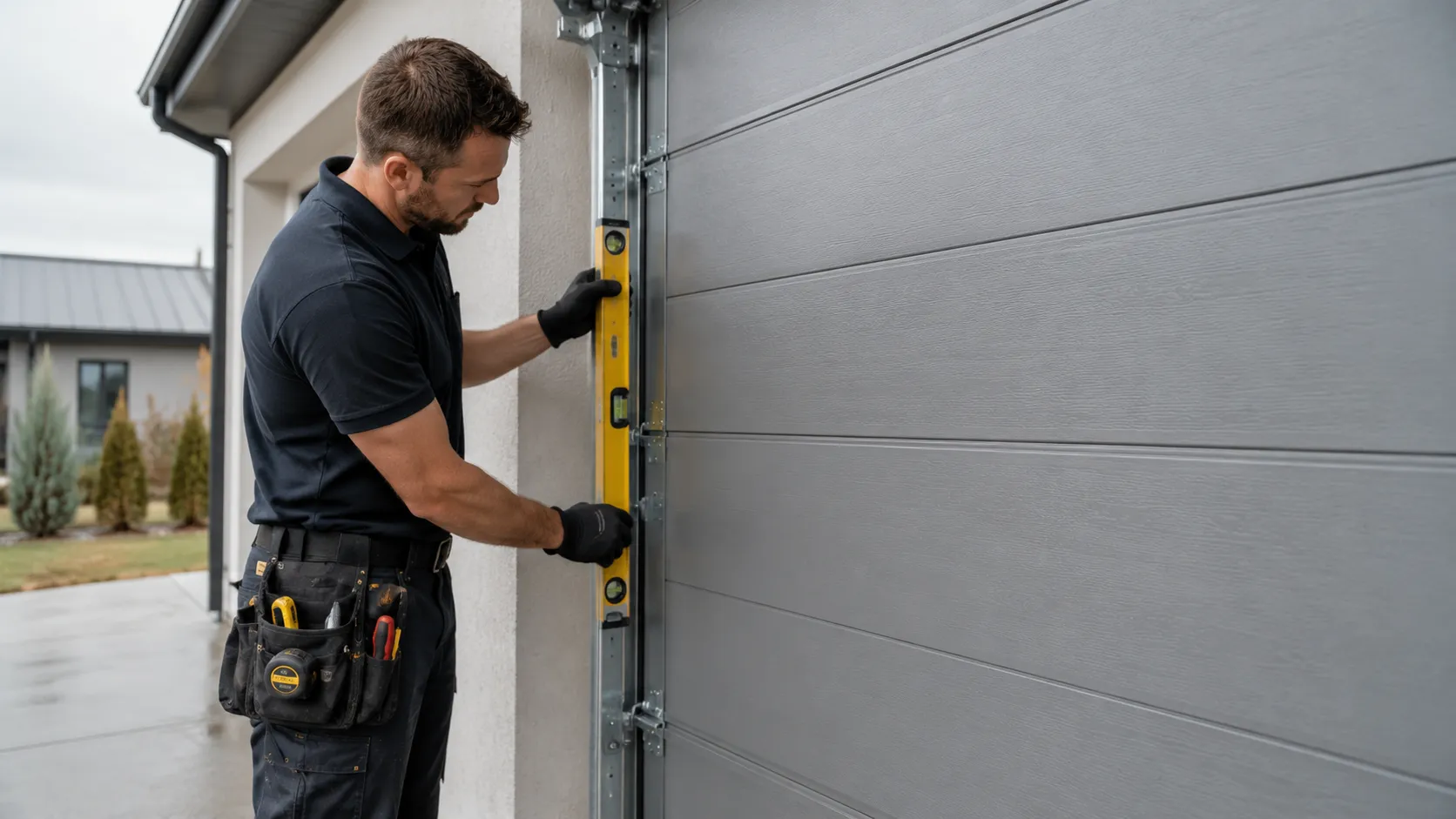
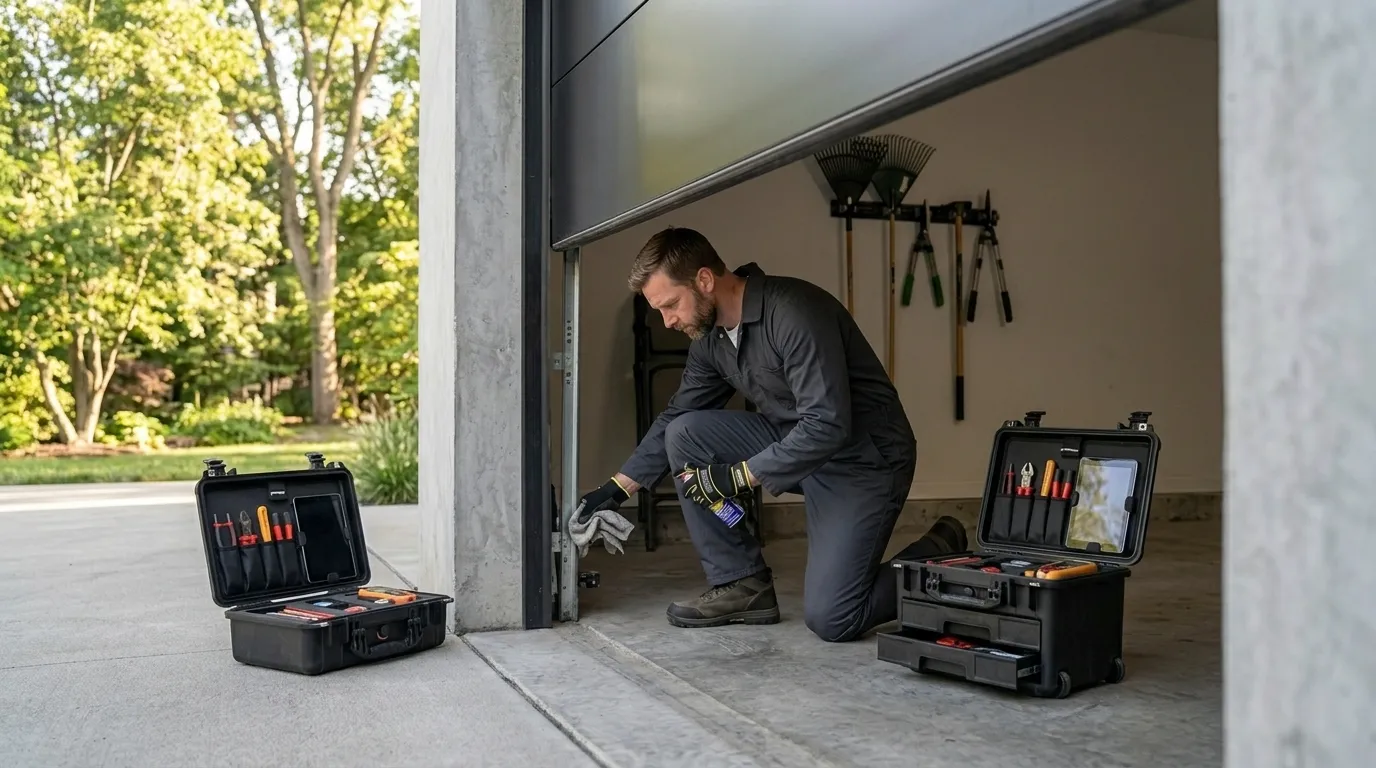
Pull the disconnect and swing the door by hand where you can, then look at the panel edge or the seam where two sections meet. A single sheet of steel with no visible second layer or foam backing means you've got the uninsulated type common to the 1967-2011 stock here, especially anything built before the 1980s. Check the bottom seal - the rubber astragal - for cracking or gaps; on an uninsulated door that's often the only thing keeping weather out.
Check for a label on the inside of the door showing an R-value; if there's no label, assume it's not insulated. If you're weighing a repair against swapping in an insulated door, check what the springs are rated for now - an insulated door usually weighs more, and that's a hardware change, not just a panel swap. One thing worth saying plainly: retrofitting foam board to an old steel door yourself rarely fixes the problem the way people hope.
It stops rattling but doesn't stop the frame from moving with temperature, and it can trap moisture against the steel.
What Local Conditions Do
Huntersville sits in a cold-moderate climate band - real winter cold, not the harshest in the region, but enough that a garage on the wrong side of a house sees a real swing between inside and outside air. On an uninsulated steel door from the 1967-2011 stock, that swing shows up as condensation on the inside skin on cold mornings, especially after a warm, humid stretch gives way to a cold snap. Moisture sits on the steel, drips onto the track and the bottom edge, and over years that's what starts corrosion on rollers and hinges before anything else fails.
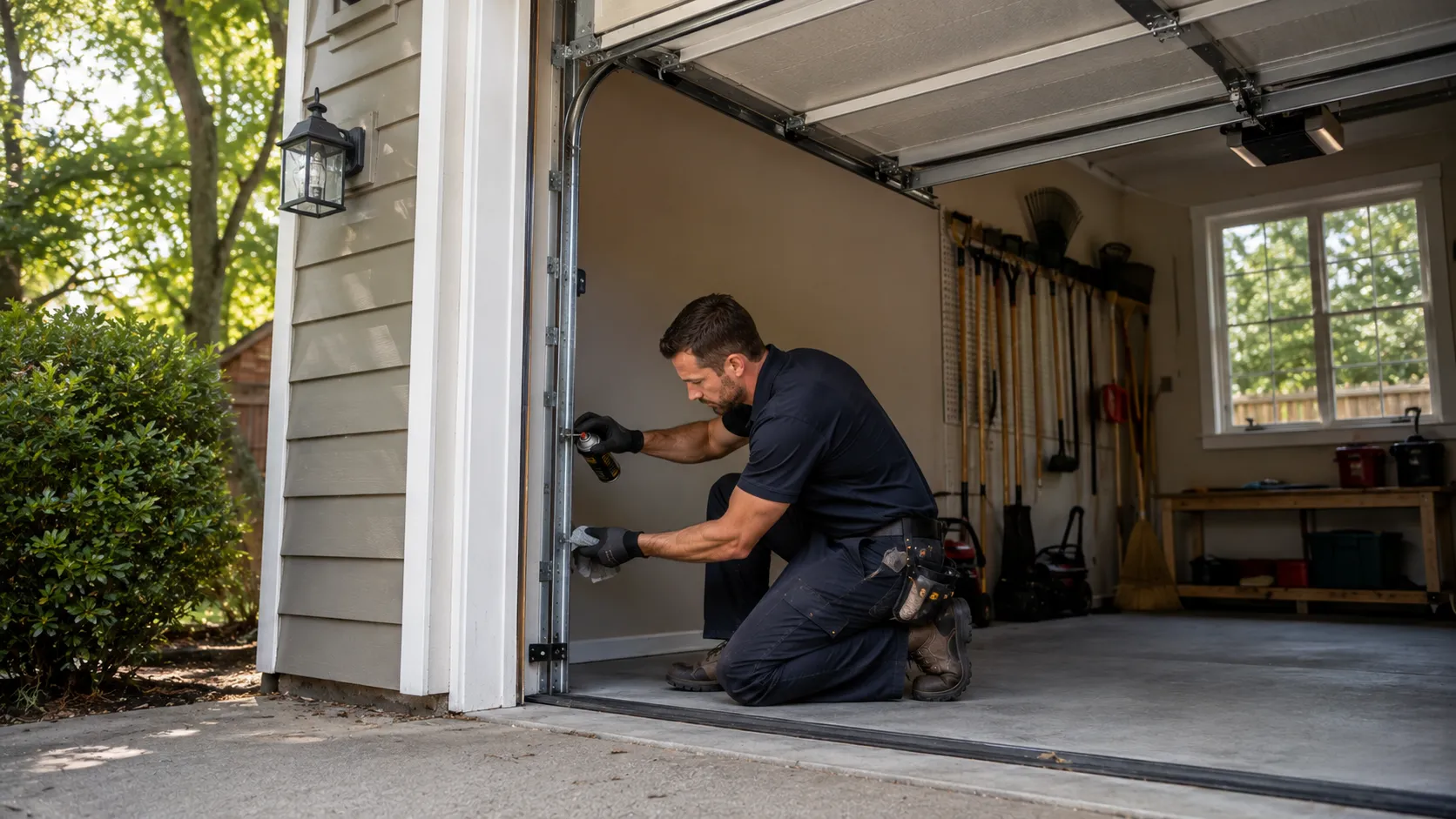
Cold also stiffens lubricant in the tracks and tightens up torsion springs, so a door that runs quiet in July can start groaning in January even with nothing mechanically wrong. None of this is dramatic weather - no hurricanes or ice storms baked into the record here - it's just steady seasonal swing acting on a door design that was never built to manage it. Houses from the 1980s and 90s wave handle it a little better than the oldest end of the range, but the door itself is usually still the weak link, whatever decade the house went up in.
Season by Season
Winter is when the cold-moderate swing does the most damage: stiff springs, slow openers, and condensation on uninsulated panels if the garage isn't vented. Check the bottom seal before the first hard cold snap - it's cheaper to replace worn weatherstripping in November than to deal with a door that won't seal in January. Spring brings the moisture back the other direction; as outside air warms faster than the garage does, you'll see sweating on the door skin and sometimes on the slab near the threshold.
That's normal on an uninsulated door and not a sign anything's failing, but it's worth wiping down hardware so it doesn't sit wet. Summer is the easiest season on the door itself, though steel skins do expand enough that a door installed slightly out of square in cooler weather can start binding on hot afternoons. Fall is the one window to get ahead of it - check springs, hinges, and rollers before cold sets in again, since anything already showing wear will get worse under the first real cold snap, not the tenth.
How We Can Help
Garage Door Repair
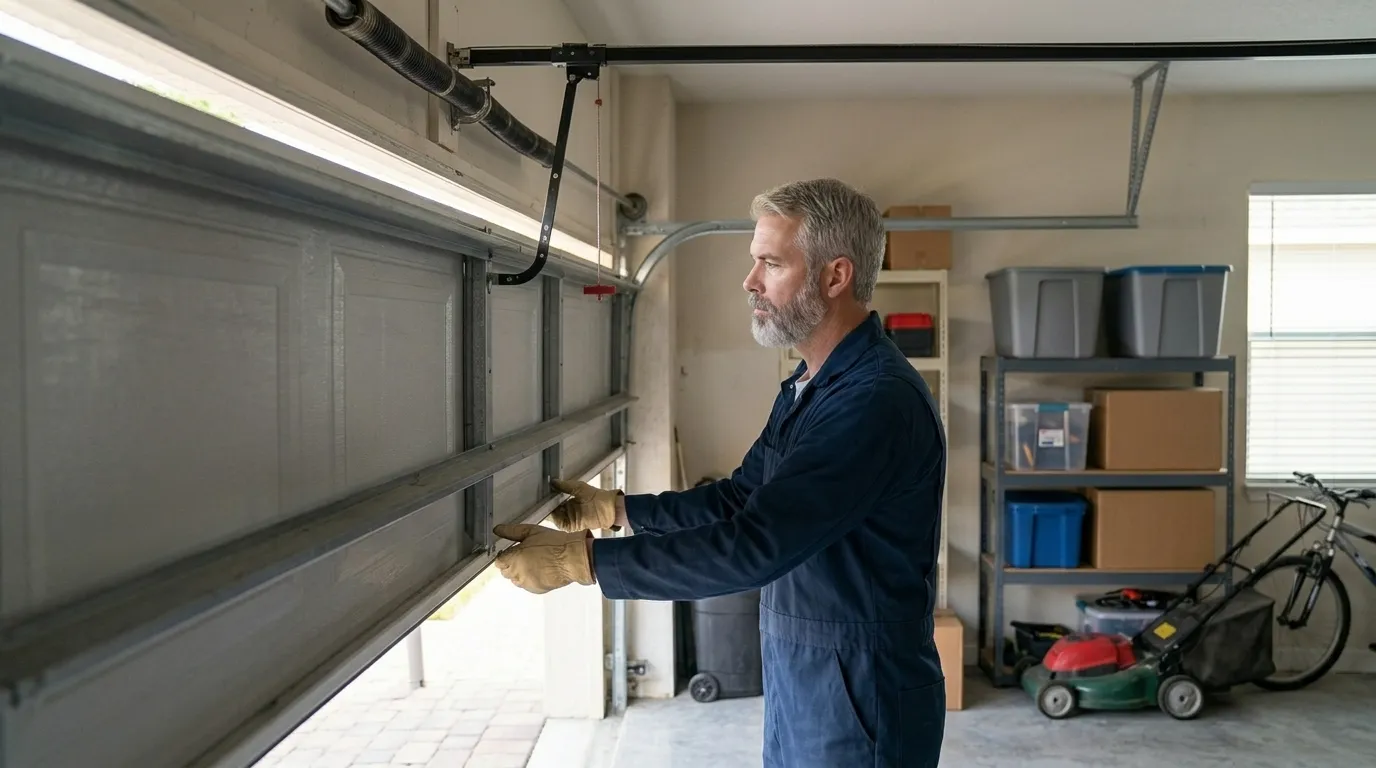
Springs, cables, tracks, rollers, and openers fixed by a tech who explains the problem before touching anything.
Learn more →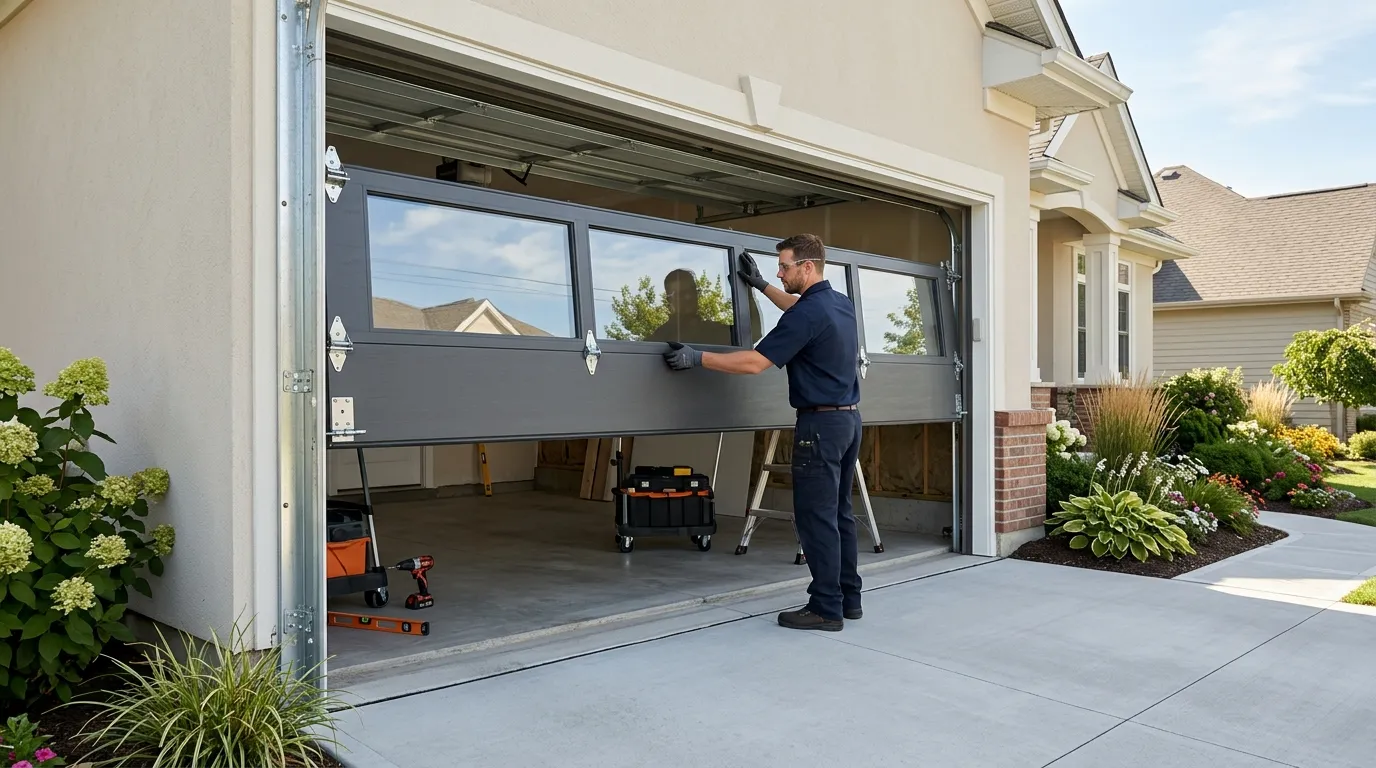
Garage Door Installation
New sectional doors sized and installed for the housing stock actually built in this area.
Learn more →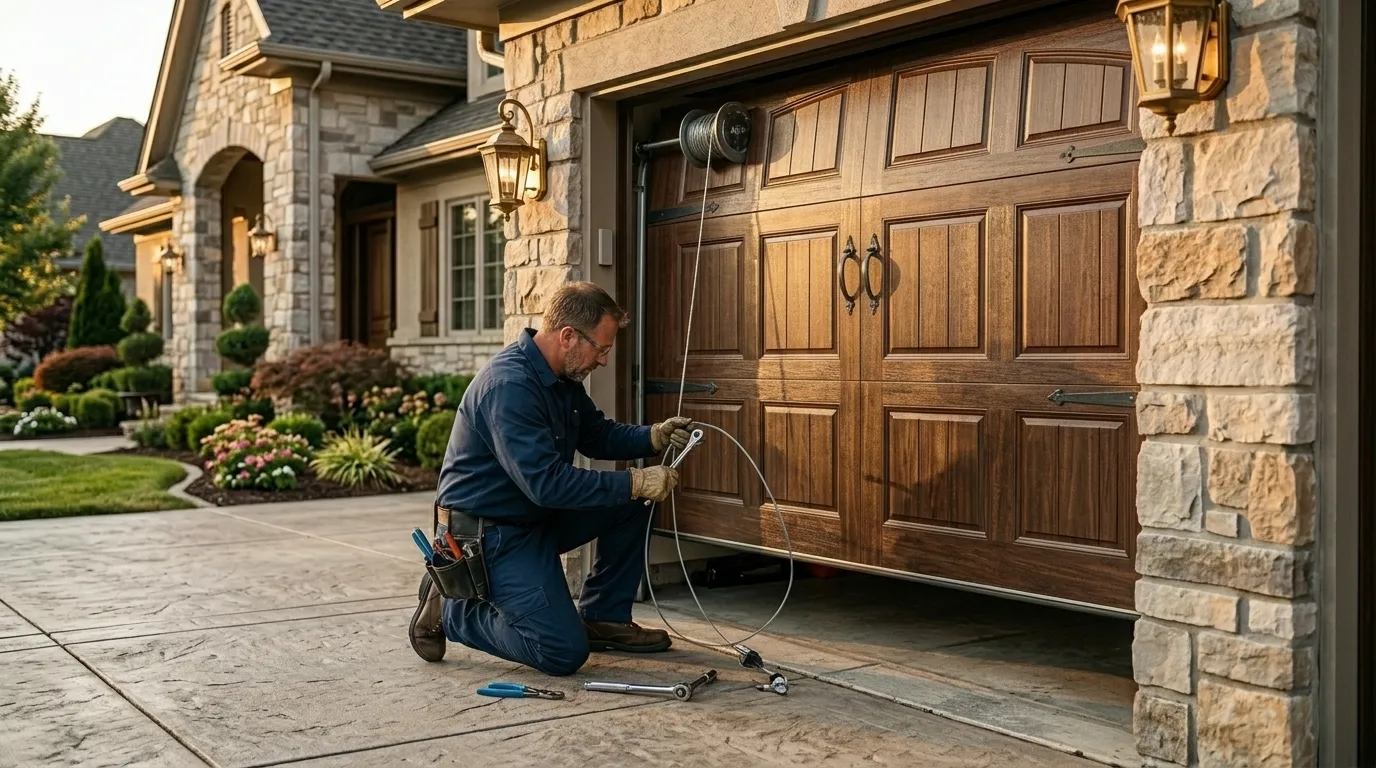
Garage Door Service
Tune-ups, lubrication, and safety checks that catch a small problem before it becomes a service call.
Learn more →Frequently Asked Questions
Are most garage doors in Huntersville insulated?
Not by default. Housing here was built mostly between 1967 and 2011, with the bulk from the 1980s and 90s, and builder-grade doors from that era are typically single-layer steel with no foam core. Unless a door's been replaced since, assume it isn't insulated until you check for an R-value label.
Why does my garage door sweat in cold weather?
Huntersville's cold-moderate climate means real swings between garage and outside air. On an uninsulated steel door, condensation forms on the inside skin when warm humid air meets a cold panel, especially after a warm stretch gives way to a cold snap. It's common on the older door stock here and not usually a sign of failure.
Should I insulate my old door or just replace it?
It depends on the door's condition, not just its age. Foam board taped to an old steel skin quiets rattling but doesn't stop the frame from moving with temperature, and it can trap moisture against the steel over time. If the door's already worn at the hinges or seals, replacement usually holds up better long term.
Have a Door That Needs a Second Opinion?
Call and describe what it is doing - we will tell you what it likely is.