
Service
Garage Door Installation for Huntersville Homes
Serving Huntersville homes built mostly between 1967 and 2011, we install doors sized for original openings and rated for our cold-moderate winters. See how the job runs.
- Licensed & Insured
- Same-Area Service Calls
- Upfront Pricing
How Long It Takes
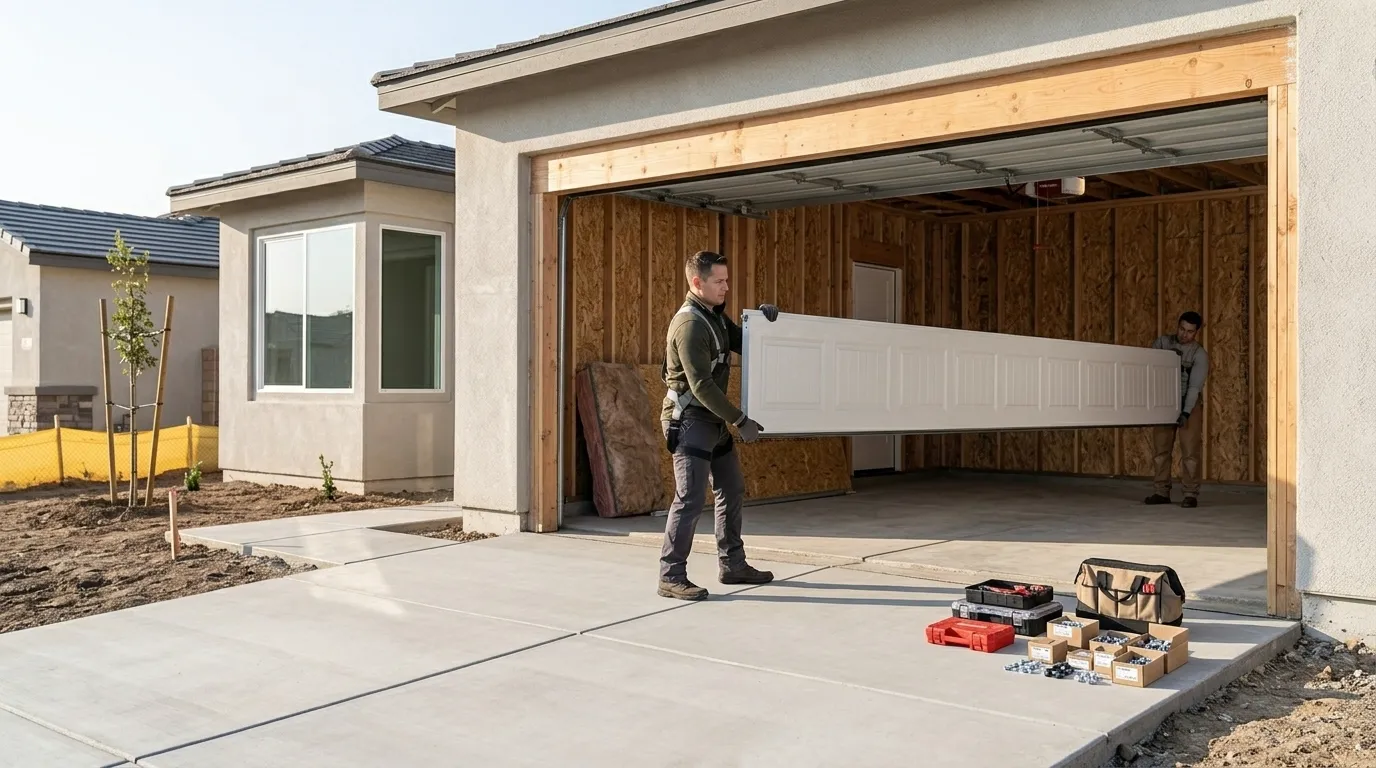
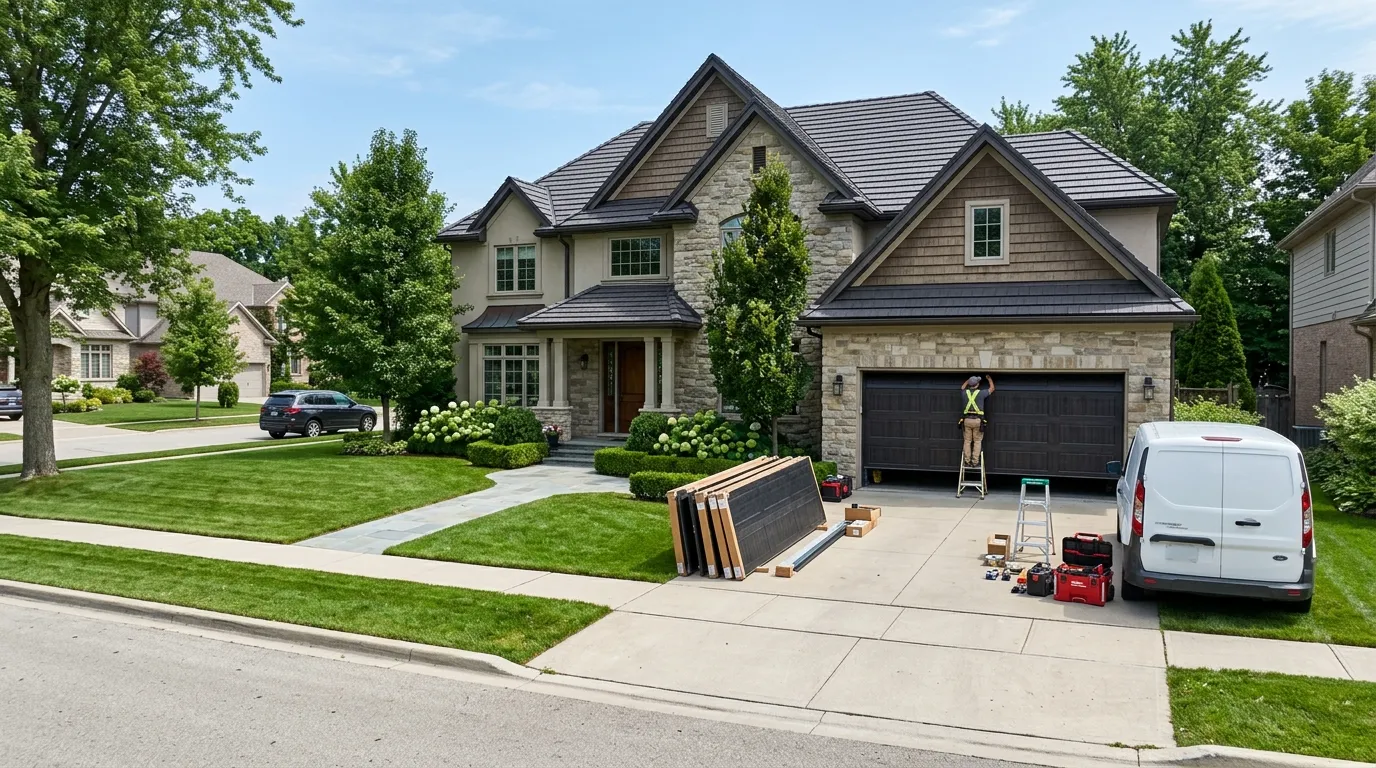
A straightforward single-door swap on a house built in the 1980s or 90s - which describes most of the 18 neighborhoods we work across in this service area - runs one day, often a few hours, because the opening, track spacing, and header are already standard for that era. Where it slows down is on houses from the older end of the 1967 start date, where the framing sometimes needs shimming to take a new door square. Double-door jobs on wider two-car openings, common in the newer builds toward the 2011 end of that build range, take a bit longer because we're setting two spring systems instead of one.
We'll tell you which situation you're in before we start cutting anything, not after. If your opening is out of square or the header's undersized for what you want to hang, that's a second visit, and we'd rather say so up front than force a door that won't sit right.
How It Shows Up
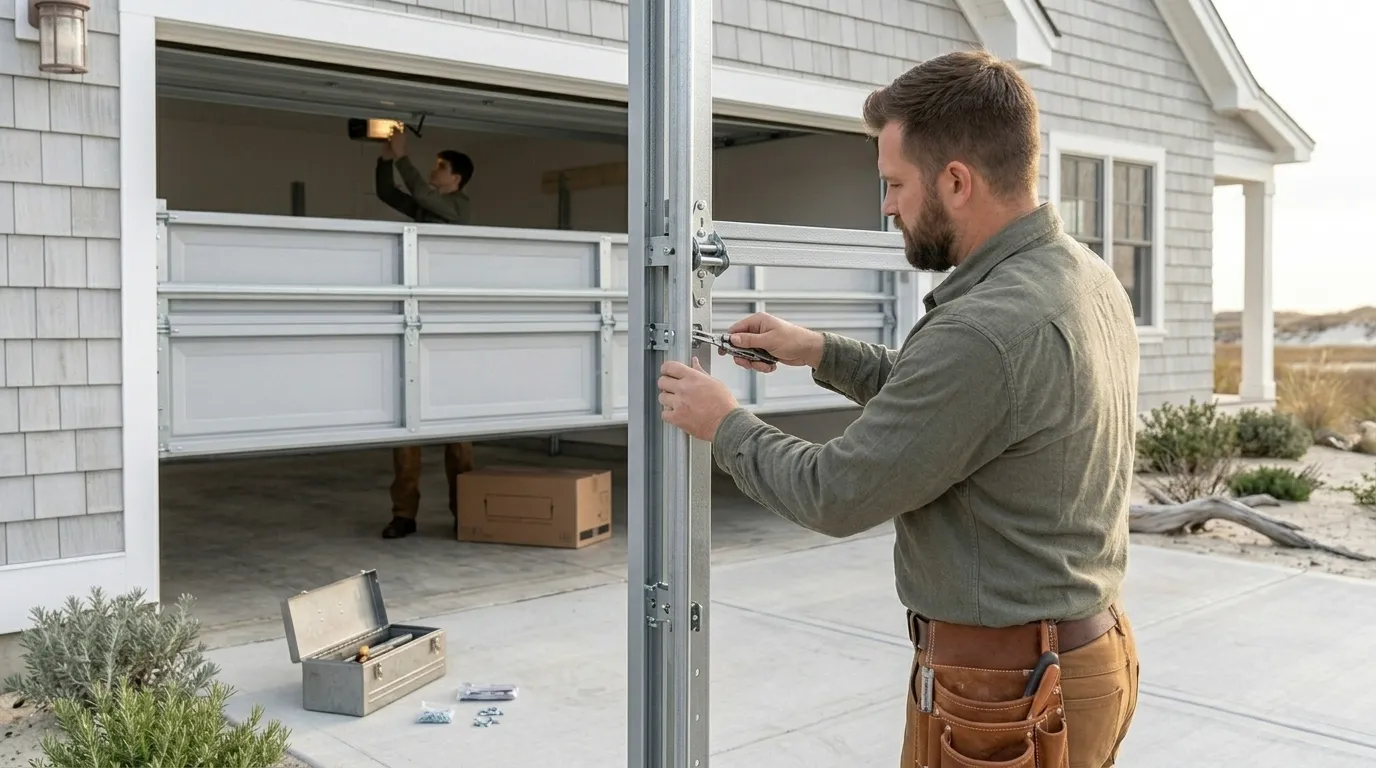
Most installation calls here aren't emergencies - they're homeowners who've watched a 25-to-45-year-old door get louder, heavier to lift by hand, and colder to stand next to in January. With median housing built around 1997 across this area, a lot of original doors are hitting the point where the steel has thinned, the insulation (if there was any to begin with) has compressed, and the panels don't seal the way they did new. You'll notice it as a door that transmits more cold into the garage than it used to, or one where the bottom weatherstrip has been replaced twice and still lets in a draft.
Some calls come from a door that still runs fine but was never insulated for a garage that's since become a workshop or gym. Either way, it's rarely a single broken part driving the decision - it's the whole unit aging out at once, springs, panels, and seals together.
What the Fix Involves
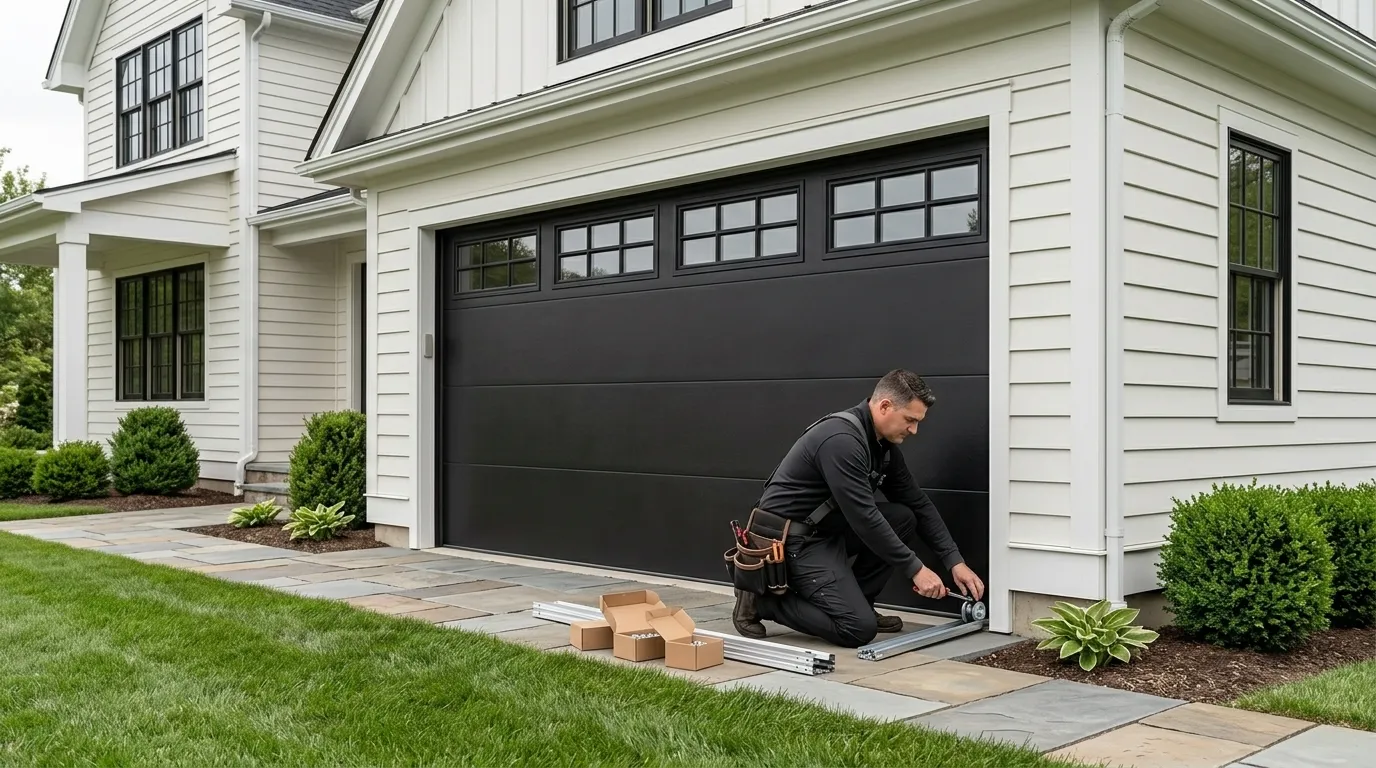
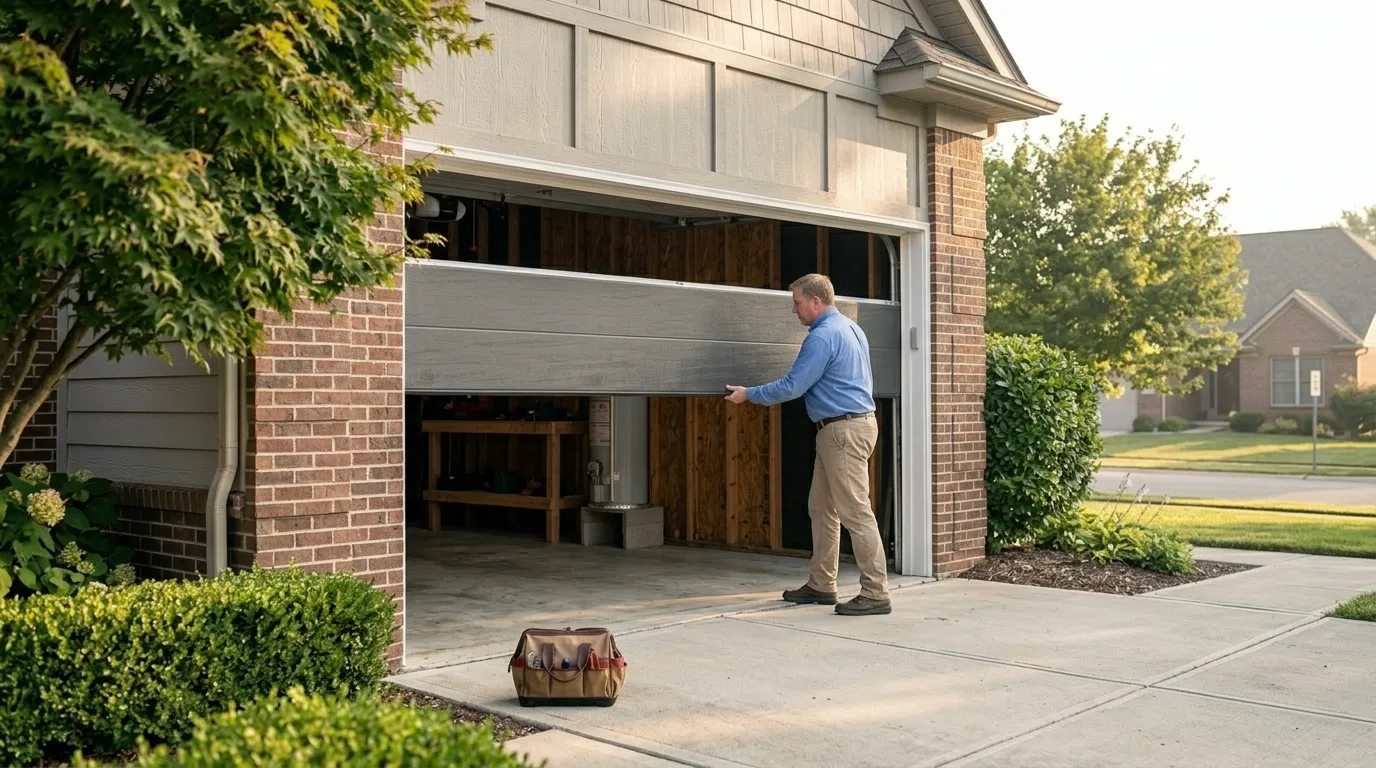
Installation starts with the opening itself: we measure and check it square against the existing frame, since houses in this area span more than four decades of construction and tolerances aren't consistent from a 1970s build to a 2000s one. We size the new door and track to that opening rather than assuming a standard fit. For our cold-moderate climate, we talk through insulated versus non-insulated panels - it matters more here than in a mild climate, less than it would somewhere with hard freezes, so we size the R-value to what the space is actually used for.
Springs get matched to the door's actual weight, not swapped from the old unit, and we set the opener's force and travel limits once the door is hung, not before. One limitation worth naming: if the existing header or jamb is undersized for a wider door than what's there now, that's a carpentry job we don't do, and we'll say so rather than force an install that won't hold up.
Why It Happens Here
The 18 named neighborhoods in this part of the Huntersville area were mostly built in two waves - a chunk from the late 1960s through the 80s, and a larger share in the 1990s and 2000s, with the housing stock's median landing around 1997. That means a large share of garage doors are now old enough to be original equipment nearing the end of its service life at the same time, which is part of why installation calls cluster in certain streets and subdivisions rather than spreading evenly. Our climate here is cold-moderate - real winter cold, but not the deep-freeze extremes that crack cheap composite panels outright.
That's exactly the range where an underinsulated original door doesn't fail catastrophically, it just gets slowly worse: more drafty, more prone to warping at the bottom panel, heavier on old rollers. With median household income in the area over $81,000 and a housing base with real owner-occupancy, most of these are homeowners replacing a worn original rather than patching a rental.
Why Huntersville Calls Us
What Happens When You Call
Call or Request a Quote
Tell us what the door is doing and roughly how old the house is - that alone points us toward the likely part before a truck leaves.
On-Site Diagnosis
A tech checks the spring, cables, tracks, and opener in person and tells you plainly what is actually wrong.
Straight Price, No Surprises
You get a number before any work starts. It covers parts and labor, nothing added after the fact.
Fixed the Same Visit
Most repairs are done in one trip. If a part needs sourcing, we tell you that upfront instead of guessing.
Talk to a Technician Before You Book
Describe what the door is doing and get a straight answer on what it likely needs.
Jobs Like Yours
Recent work from this service line.
Other Ways We Can Help
Frequently Asked Questions
How old does a garage door usually get before replacement makes more sense than repair?
There's no single number, but a lot of the doors we're asked to replace here are originals from houses built in the 1970s through 90s - that's 25 to 50 years on the same springs, panels, and hardware. Once the steel's thinning and the opener's fighting worn rollers, a repair often just buys another year or two.
Do I need an insulated door in Huntersville?
Our winters fall in a cold-moderate band, not extreme cold, so it's a real factor but not an automatic requirement. If the garage is attached to living space or you use it as a workshop, insulated panels are worth the difference. If it's just for parking, a non-insulated door is a reasonable, cheaper call.
Will a new door fit my existing opening?
Usually yes - most homes in this area were built with fairly standard opening sizes for their era. The exception is older houses near the early end of the local build range, where framing sometimes needs shimming or, occasionally, carpentry work we don't do ourselves before a new door will sit square.
Need Garage Door Installation for Huntersville Homes?
Call now for straight answers on cost and timing.