
Huntersville Garage Door Guide
What That Sound From Your Garage Door Is Telling You
Huntersville homes built 1967-2011 develop specific noises as hardware ages - here's what each sound means and when it signals real trouble in cold weather.
- Licensed & Insured
- Same-Area Service Calls
- Upfront Pricing
The Problem
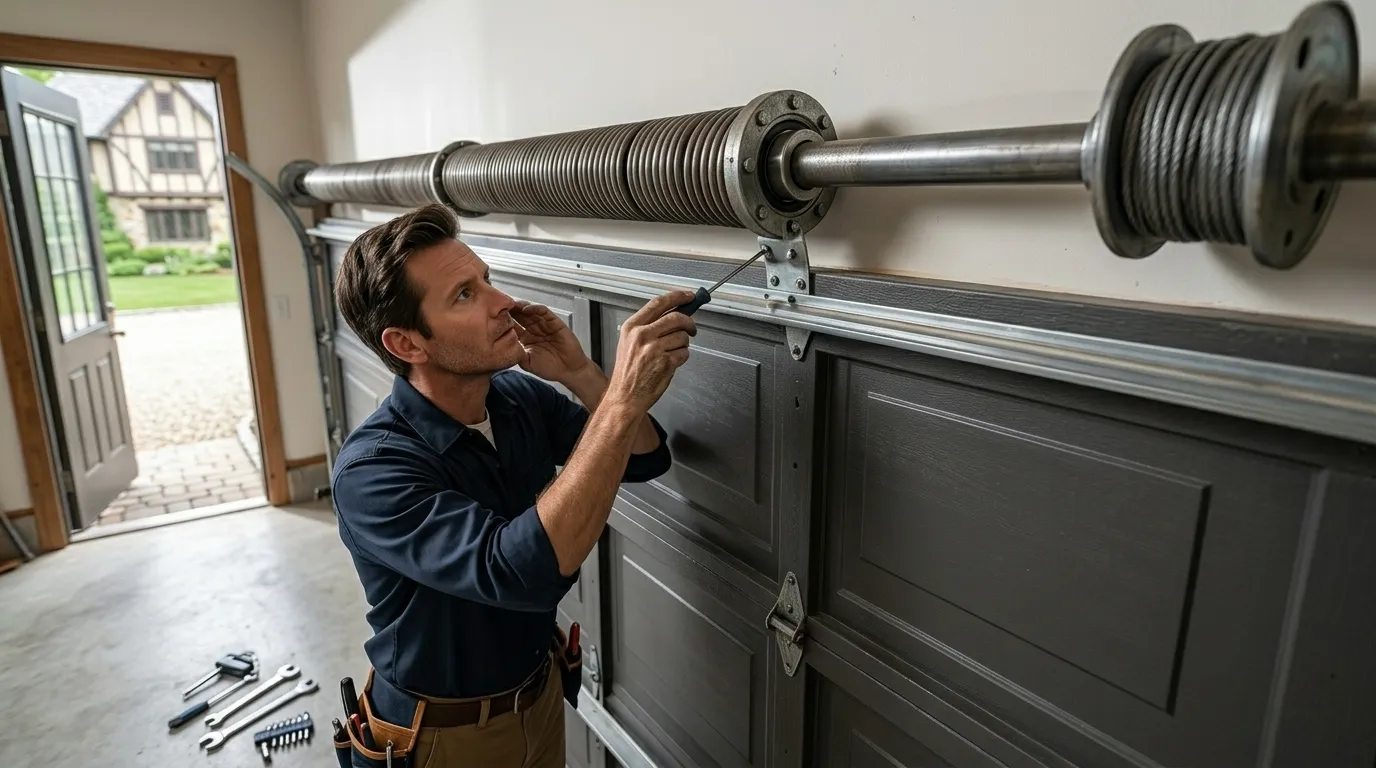
Most houses in Huntersville went up between 1967 and 2011, and the heaviest chunk of that stock dates to the 1980s and 90s. That means the garage door on a lot of these houses is either the original steel sectional door or a first replacement, riding on hardware that's now twenty to forty years old. Springs stretch and rollers wear at different rates depending on how the door was installed and how often it's used, so the noise you hear today is the hardware telling you where it's given out first.
A grinding sound isn't the same problem as a sharp bang, and a rhythmic thump isn't the same as a high-pitched squeal. Age alone doesn't create noise - worn parts under tension do, and a door built in the late 80s has had three or four decades of open-close cycles to wear something down. The mistake we see most is treating every noise the same way, spraying lubricant on it, and hoping it goes away.
Some noises point to a five-minute fix. Others point to a spring that's about to let go, and by then the noise was the only warning you got.
What to Check
Before you call anyone, listen for where the noise happens in the door's travel, not just that it happens.
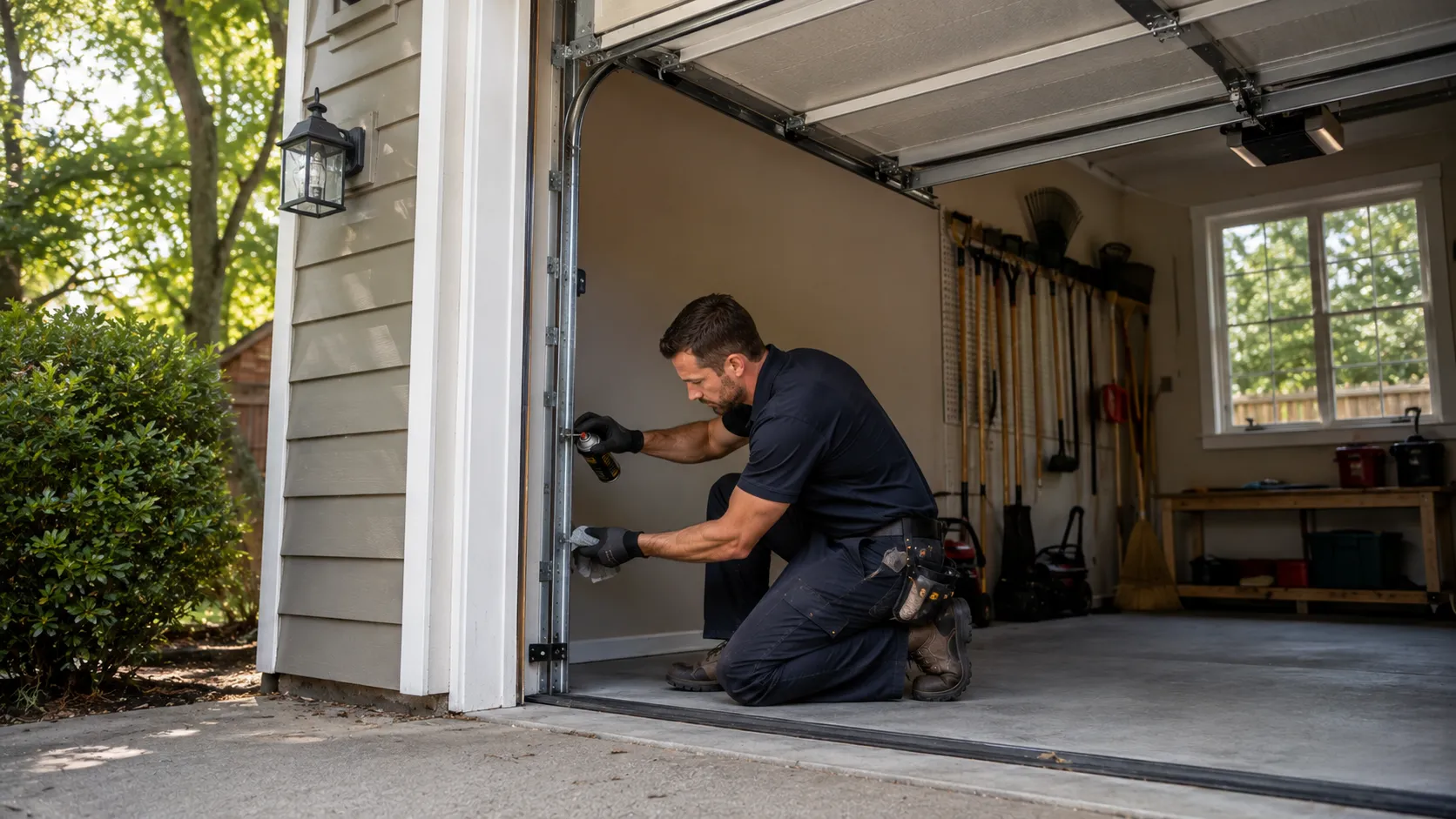
- Grinding or scraping as the door moves usually means a roller has worn through its bearing or the track has pulled away from the wall - common once a door passes the twenty-year mark, which describes a lot of Huntersville garages. - A loud bang followed by the door refusing to open is almost always a broken spring, torsion or extension. Don't keep hitting the opener switch; you can strip the gears trying to force a door with a broken spring.
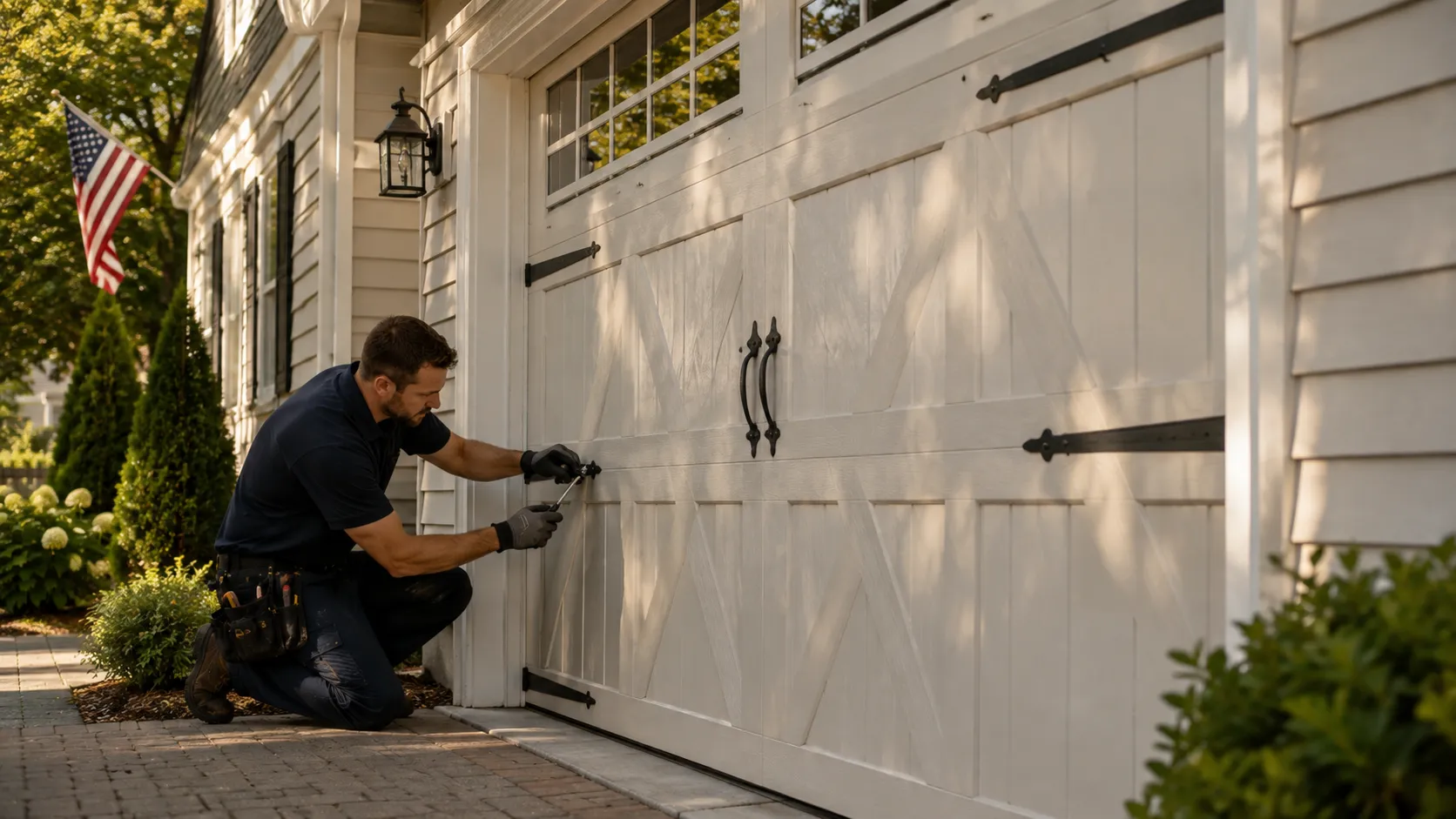
- Rhythmic thumping once per rotation points to a flat spot on a roller or a bent section of track. - A metallic pop on cold mornings is often just a torsion spring adjusting to overnight contraction - annoying, not dangerous, unless it happens on every single cycle. - Chain slap or rattle on a chain-drive opener usually means the chain has stretched and needs tightening, not replacing.
We won't guess a diagnosis over the phone without hearing the sound or seeing the door move. What sounds like a spring on the phone is sometimes a bent track, and the fix for one will make the other worse.
What Local Conditions Do
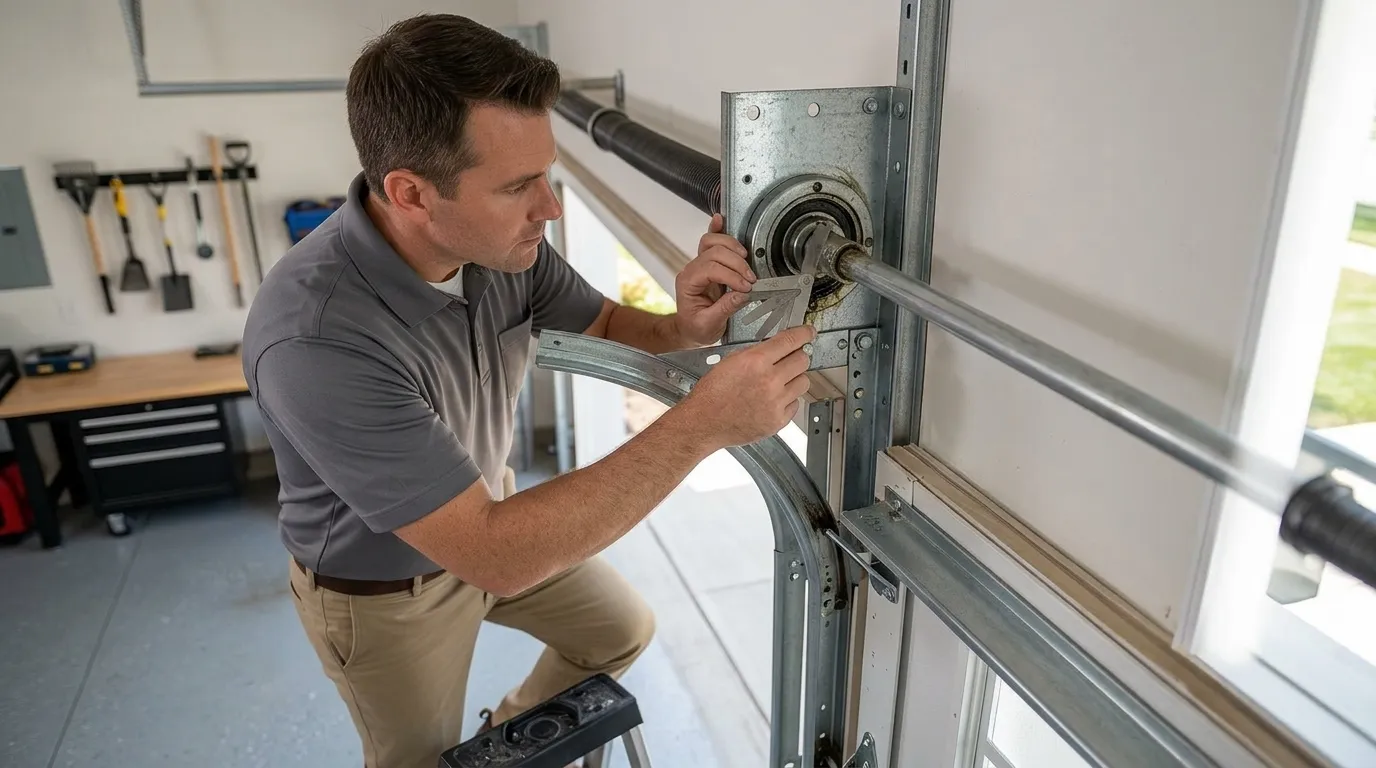
Huntersville sits in a cold-moderate climate band, which means real winter cold snaps but nothing like the deep freezes farther north. That swing matters for garage door hardware more than people expect. Steel torsion springs and tracks contract in cold air, which tightens tolerances that were set at a comfortable shop temperature.
A garage door in Huntersville that ran quiet in October can start popping or groaning in January simply because the metal shrank a fraction of an inch. Lubricant thickens in an unheated garage too, which is why rollers that were silent all summer start to squeal the first cold week. On the other end, summer humidity swings put moisture back into wood trim and any wood-composite panel doors, which can make hinges bind slightly and creak on the swing.
None of this means the hardware is failing - it means the hardware is doing exactly what steel and grease do across a real seasonal range here. The noise is a signal of the season, not always a signal of damage, but it's worth checking after the first hard cold snap each year rather than waiting for something to actually break.
Season by Season
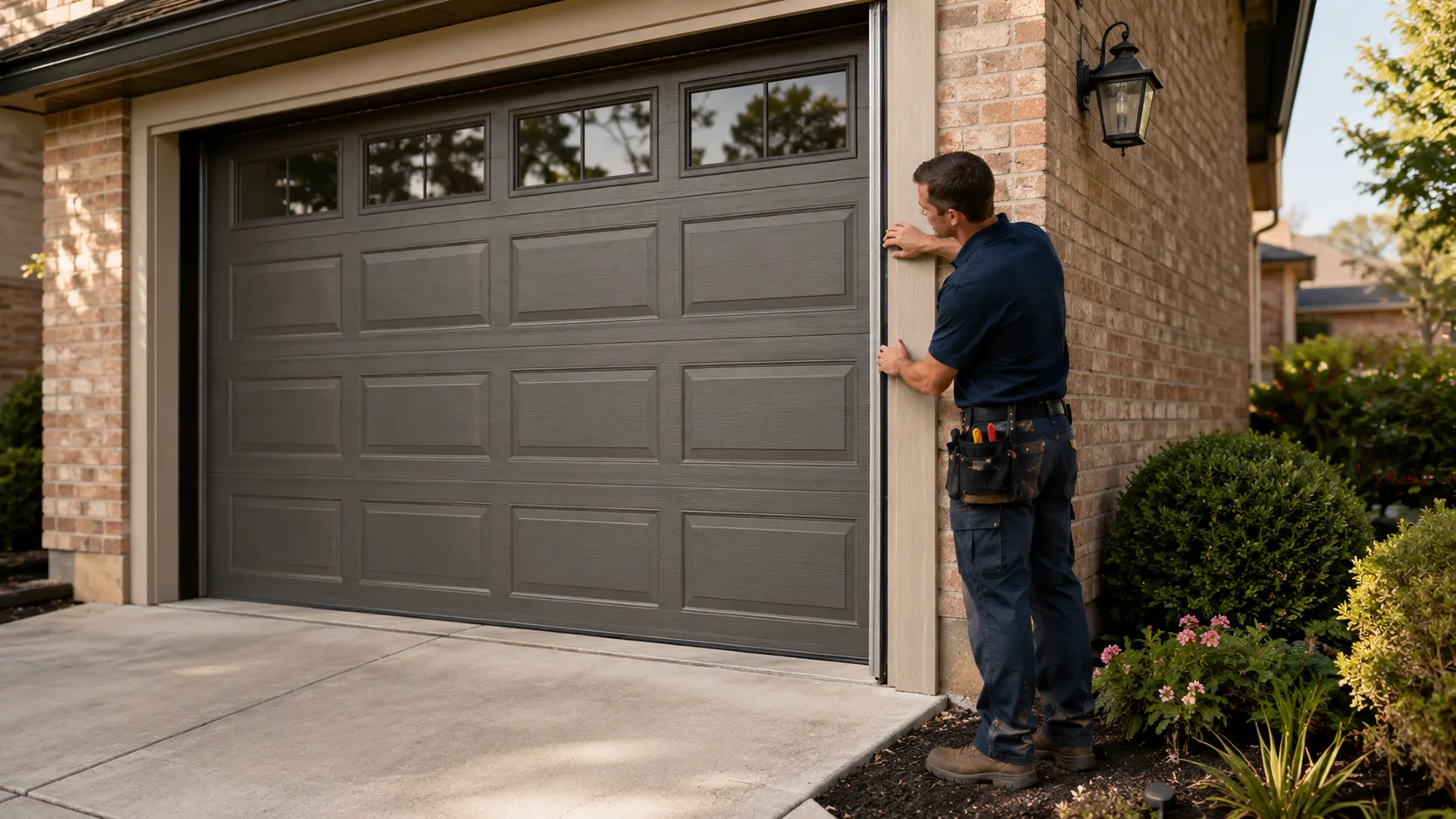
Winter - expect the loudest noises of the year in the first sustained cold stretch. Torsion springs are under the most tension when cold, so a stressed spring is more likely to finally let go on a January morning than in July. Check spring condition before the first freeze, not after.
Spring - as temperatures climb back up, contracted metal expands again and a lot of the winter noise quiets on its own. This is a good window to re-lubricate rollers and hinges before summer humidity sets in.
Summer - heat isn't usually the noisemaker here; humidity is. Wood-trimmed doors and panel seals can swell slightly, and openers left running near their thermal limit on the hottest days may run louder or slower.
Fall - the transition period, and the best time to have hardware checked, because you can catch a roller or hinge that's marginal before the first cold snap turns it into a bang. Waiting until winter to deal with a noise you first heard in October usually means dealing with it at the least convenient moment - a Saturday morning with a car stuck inside.
How We Can Help
Garage Door Repair
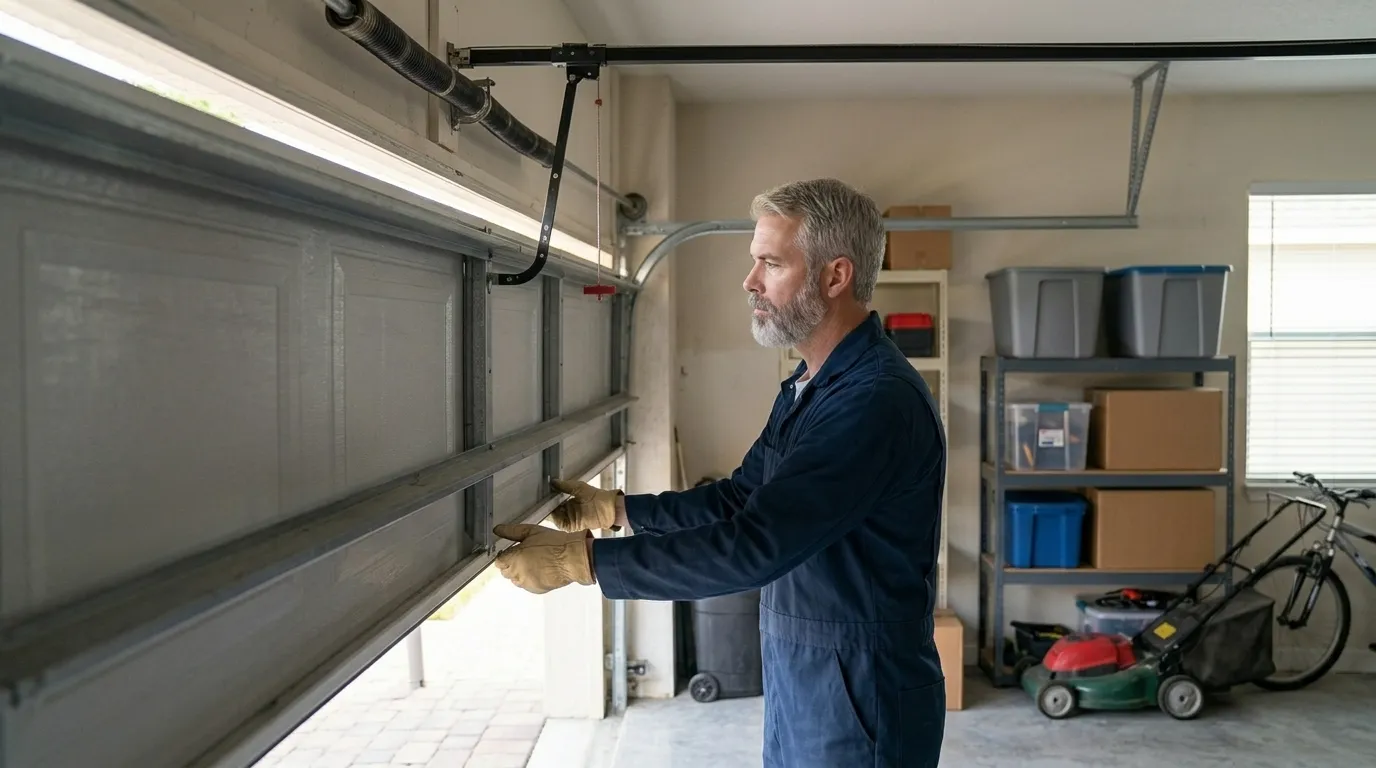
Springs, cables, tracks, rollers, and openers fixed by a tech who explains the problem before touching anything.
Learn more →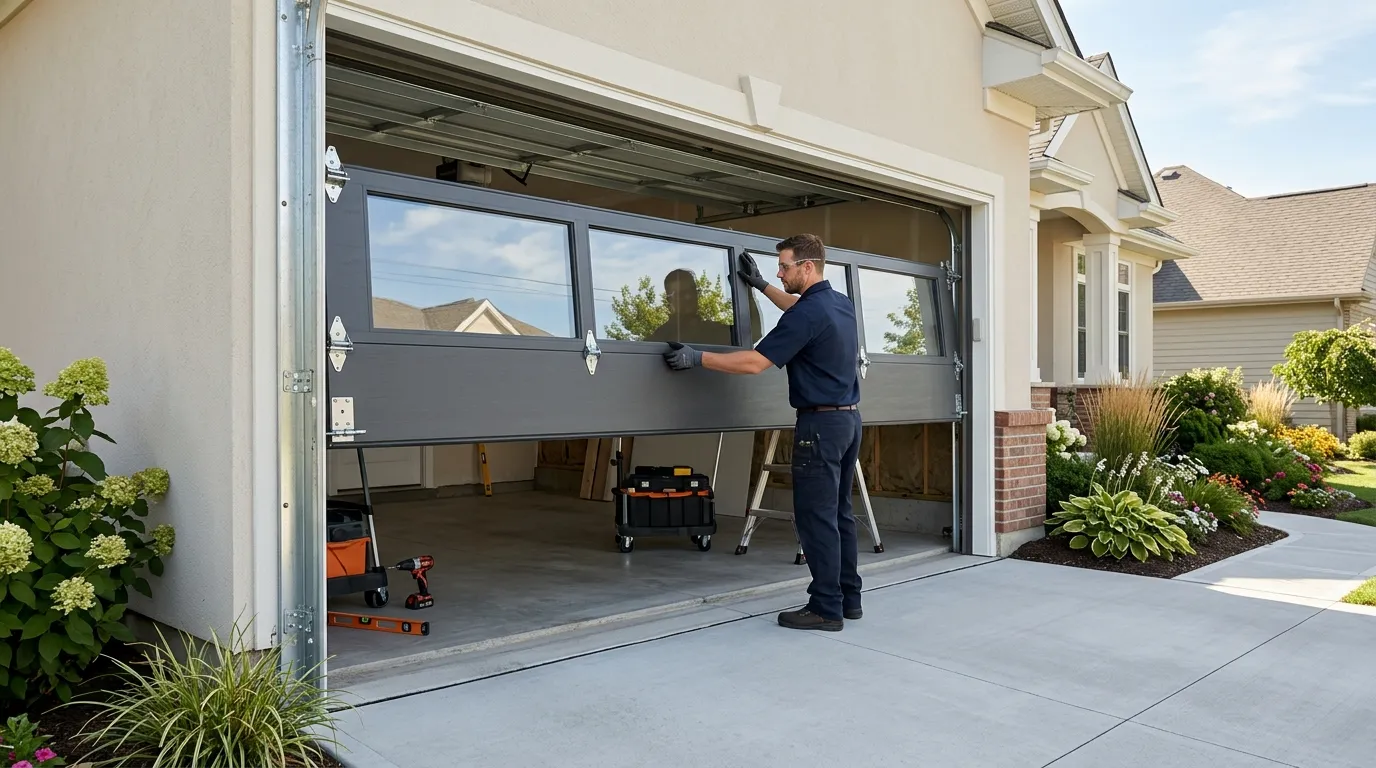
Garage Door Installation
New sectional doors sized and installed for the housing stock actually built in this area.
Learn more →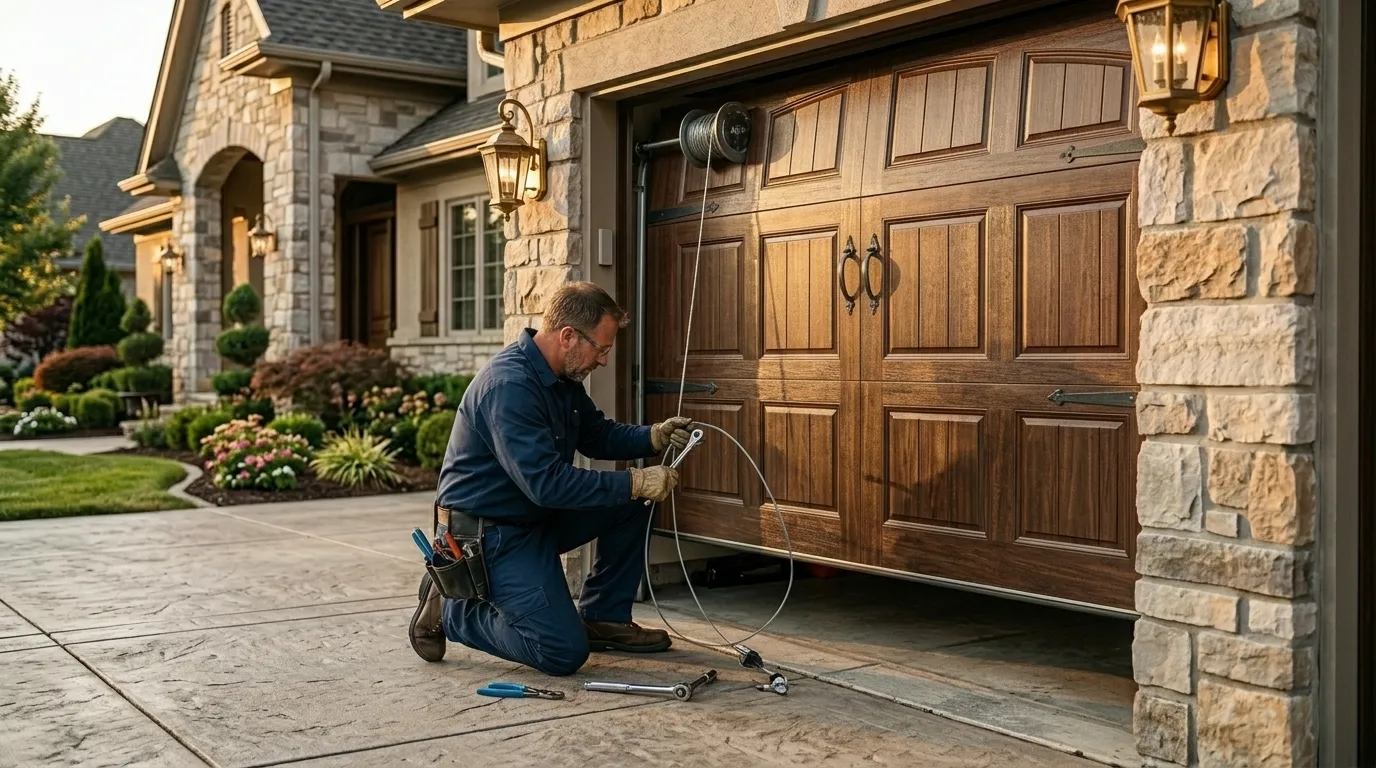
Garage Door Service
Tune-ups, lubrication, and safety checks that catch a small problem before it becomes a service call.
Learn more →Frequently Asked Questions
Why does my garage door make a loud bang and then not open?
That's almost always a broken torsion or extension spring letting go under tension. It's common on doors that have racked up a couple decades of cycles, which fits a lot of Huntersville's 1980s and 90s housing stock. Stop hitting the opener switch - a broken spring under load can strip the opener gears or worse. This one isn't a DIY fix; the spring is under enough force to cause real injury.
Is a squeaky door in winter something to worry about?
Usually not. In Huntersville's cold-moderate climate, grease thickens overnight and rollers that ran quiet all summer start to squeal on the first cold mornings of the season. A light re-lubrication of rollers and hinges usually clears it. If the squeal turns into a grind or the sound only happens on one side of the door, that's worth a closer look.
My house was built in the 90s - is that why my door sounds different than my neighbor's newer one?
Likely, yes. Most Huntersville-area houses went up between 1967 and 2011, with the heaviest concentration from the 1980s and 90s, so opener types, spring styles, and track hardware vary a lot house to house depending on when it was built or last replaced. A door with original 1990s hardware is going to sound different from one redone five years ago, even next door.
Do you work outside Huntersville itself?
We cover Huntersville and the surrounding area, including Davidson, Lowesville, Westport, Mount Holly, and out to towns like Denver and Harrisburg within about a 15 to 20 mile range. If you're not sure whether your address is in range, just ask when you call.
Have a Door That Needs a Second Opinion?
Call and describe what it is doing - we will tell you what it likely is.