
Service
Garage Door Roller Replacement, Huntersville NC
Steel rollers on 1980s-90s Huntersville garage doors wear out and bind. Here's how long roller replacement takes, what it involves, and why it happens here.
What Happens When You Call
-
1
Call or Request a Quote
Tell us what the door is doing and roughly how old the house is - that alone points us toward the likely part before a truck leaves.
-
2
On-Site Diagnosis
A tech checks the spring, cables, tracks, and opener in person and tells you plainly what is actually wrong.
-
3
Straight Price, No Surprises
You get a number before any work starts. It covers parts and labor, nothing added after the fact.
-
4
Fixed the Same Visit
Most repairs are done in one trip. If a part needs sourcing, we tell you that upfront instead of guessing.
How Long It Takes
A standard roller replacement on a double door runs about an hour once the truck is on site, sometimes less if the track itself hasn't warped. Single doors go faster. That's for swapping worn rollers on both sides top to bottom - ten or twelve rollers depending on the door height.
If a track bracket has pulled loose from the jamb, or a roller has jumped the track and bent the rail, add time to straighten or replace that section. We don't quote a number without seeing the door, because a door that's been limping along on a broken roller for months usually has a bent track to go with it, and that's a different job. Most Huntersville homes built in the 1980s and 90s still have the original steel rollers on steel tracks, which is the setup that wears fastest and takes the most time to get right once it's gone bad.
Nylon roller upgrades take roughly the same time to install but run quieter and last longer once they're in.
How It Shows Up
It usually starts as a grinding or rattling noise right as the door passes the point where the track curves from vertical to horizontal - that's where a worn roller binds hardest. Then the door starts hesitating at that spot, or jerks instead of rolling smooth. Left alone, a roller with a cracked wheel or a stripped stem will eventually let the door drop off the track on one side, which is a heavier repair than a roller swap.
Homeowners across the Huntersville area with 1980s and 90s builds tend to notice it first on the coldest mornings of the year, when stiff steel and dried-out roller bearings make the noise worse before the door warms up and loosens. If your door is shuddering more on cold starts than it does by afternoon, that's roller wear talking, not the opener.
What the Fix Involves
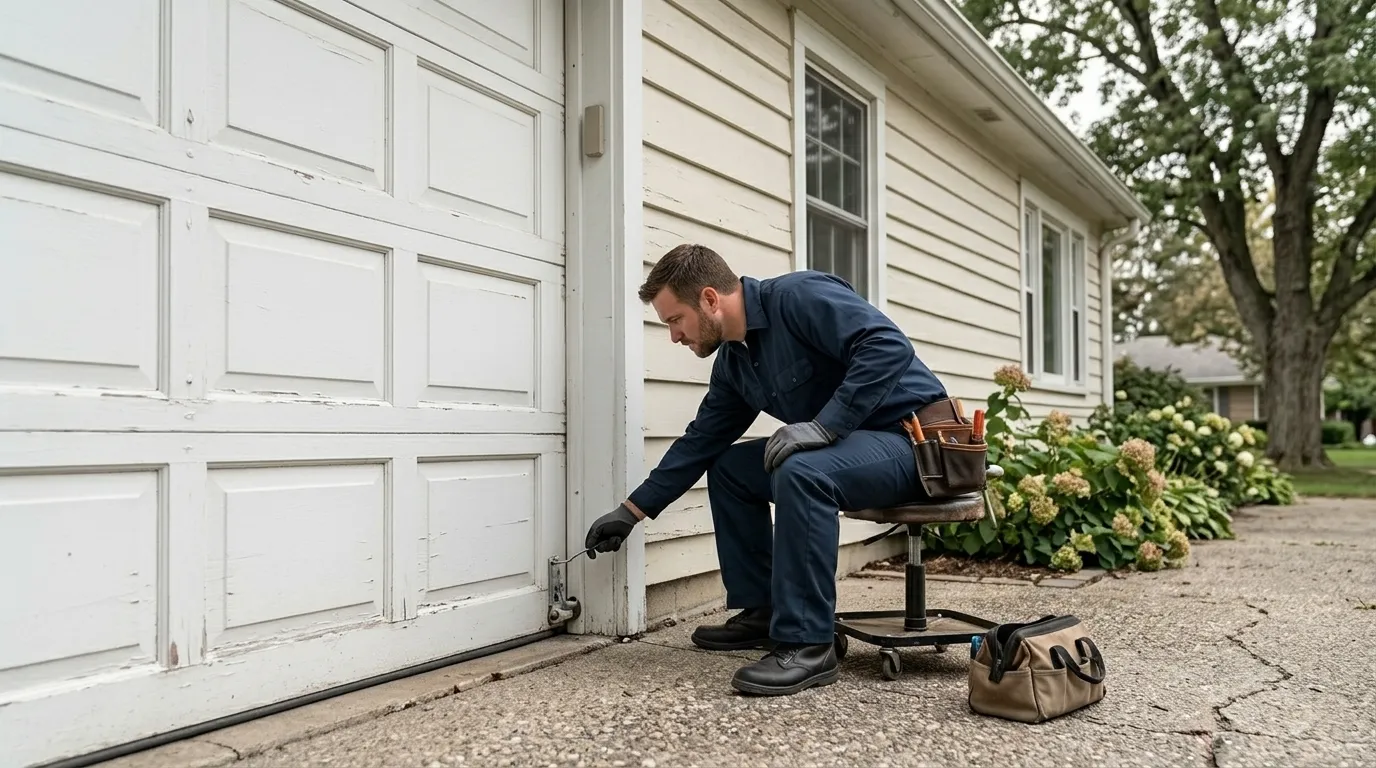
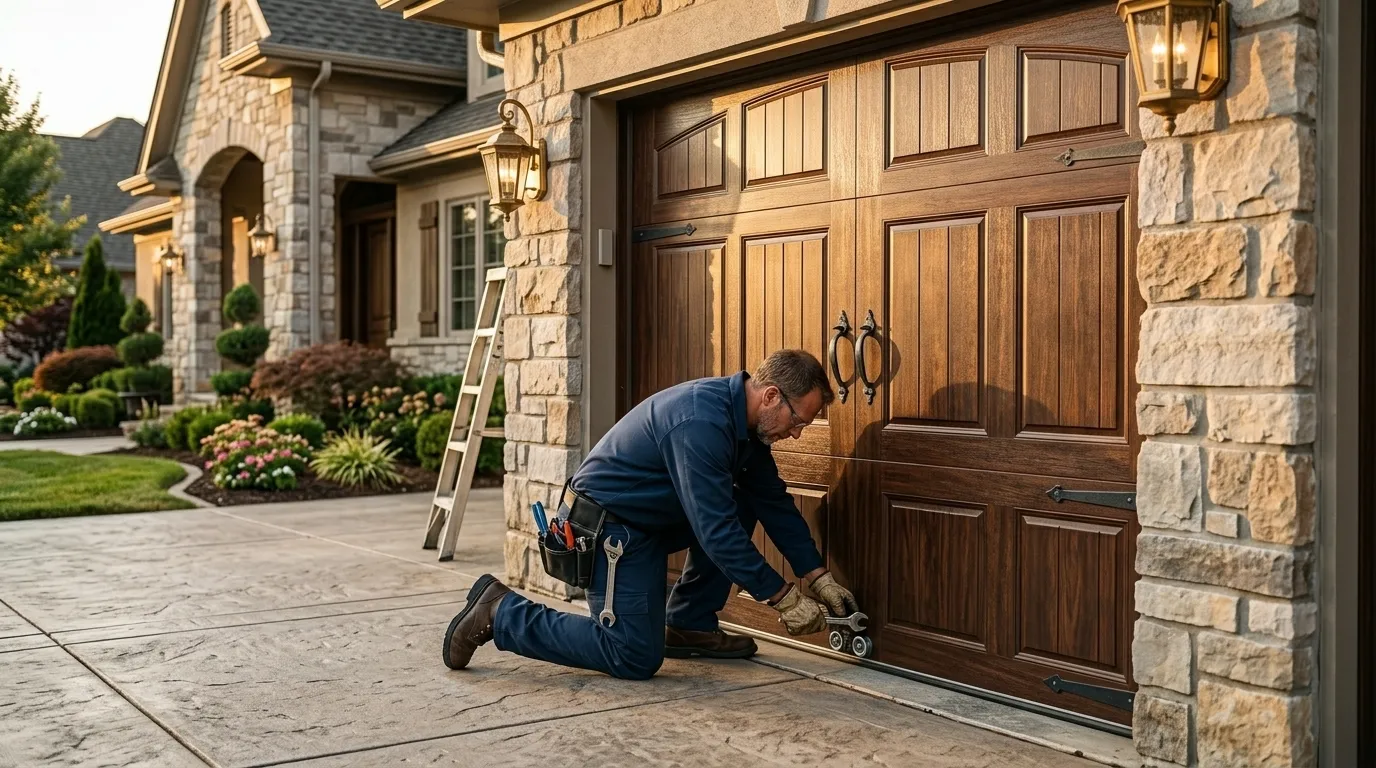
We take the door down section by section, pull the old rollers out of the hinges and end brackets, and check the track for scoring or bends while it's open - a groove-worn track from years of a bad roller riding it wrong needs straightening or replacing, not just a new roller dropped in. Steel doors from the 1980s-90s wave of building in this area usually have 7-foot or 10-foot steel rollers on plain bearings; we replace those with sealed nylon rollers on ball bearings, which run quieter and don't need the periodic oiling steel rollers demand.
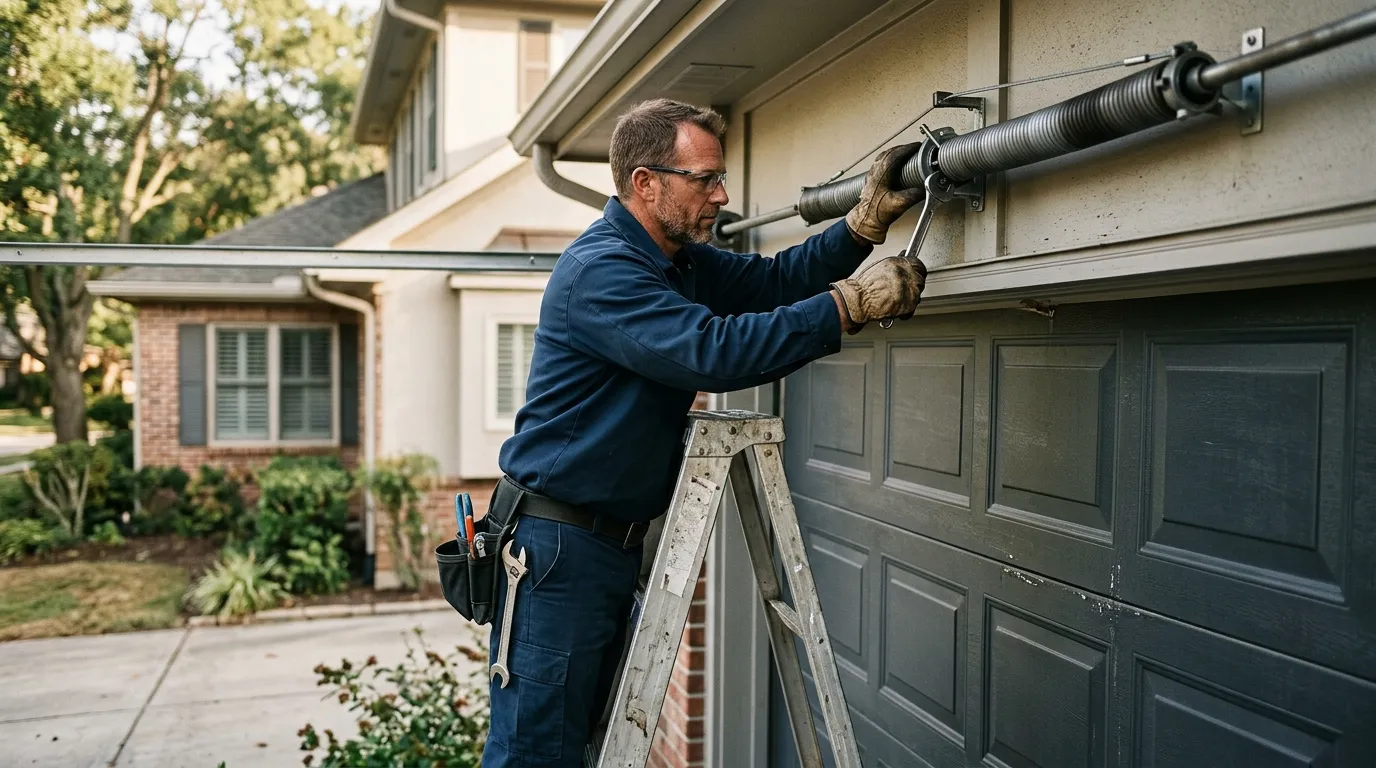
We also check the lift cables and hinges while the door's apart, since a roller failure often means the whole track assembly has been under uneven strain for a while. Straightforward roller swaps don't require touching the springs, but if a spring's near the end of its life we'll flag it rather than pretend the two aren't related.
Why It Happens Here
Housing across the Huntersville service area was mostly built between 1967 and 2011, with the bulk of it - the 1980s and 90s wave - still running original steel rollers on steel tracks, and steel-on-steel is exactly the combination that wears fastest without regular lubrication. Add a moderate cold climate with real temperature swings between summer humidity and winter cold snaps, and steel expands and contracts enough over 30-plus years to loosen roller stems and rack tracks slightly out of true.
That combination - older steel hardware plus a climate that stresses it twice a year - is why roller wear shows up as a common call across the 18 named areas we work in, from Davidson and Lowesville out to Denver and Harrisburg. Newer builds with factory nylon rollers hold up longer, but a lot of the housing stock here predates that as standard equipment.
Why Huntersville Calls Us
Talk to a Technician Before You Book
Describe what the door is doing and get a straight answer on what it likely needs.
Jobs Like Yours
Recent work from this service line.
Frequently Asked Questions
Can I just replace one roller instead of the whole set?
You can, but if one roller failed from age, the others on the same door are the same age and close behind it. We'll tell you honestly if the rest look fine, but on a door original to a 1980s or 90s build, replacing the whole set at once usually saves you a second call within a year or two.
Will new rollers make the door quieter?
Usually, yes. Sealed nylon rollers on ball bearings run noticeably quieter than the original steel rollers on plain bearings that came with most doors built in this area's 1980s-90s wave. It won't be silent, but the grinding at the curve should go away.
Do I need new rollers if the door still opens fine?
Not necessarily. If there's no grinding, no hesitation, and the rollers look round and smooth in the track, they've got life left. We won't sell you rollers you don't need - we'll tell you what we actually see when we're there.
Why does the noise get worse in cold weather?
Steel rollers and steel tracks both stiffen up in the cold, and any wear in the bearing or a slightly bent track shows up more when everything's contracted tight. It's the same wear, just more obvious on a cold start than on a warm afternoon.
Need Garage Door Roller Replacement, Huntersville NC?
Call now for straight answers on cost and timing.